Sensitive Skin and Allergic Skin Are Not the Same Problem
Sensitive skin and allergic skin often get treated like twins, but they come from different stories. One is usually a pattern of low tolerance: the skin stings, flushes, dries out, or feels tight when its barrier is stressed by weather, fragrance, strong actives, over-cleansing, or too many products at once. The other is an immune reaction to a specific substance, which means the body has decided that ingredient is a threat and responds with inflammation that can appear hours or even days later. The distinction matters because the right response is not always the same. Sensitive skin usually needs fewer irritants, better barrier support, and slower product changes. Allergic skin needs detective work, avoidance of the culprit, and sometimes professional patch testing. When you can tell the difference, you stop blaming every product equally and start reading your skin with more confidence.
The Everyday Pattern of Sensitive Skin
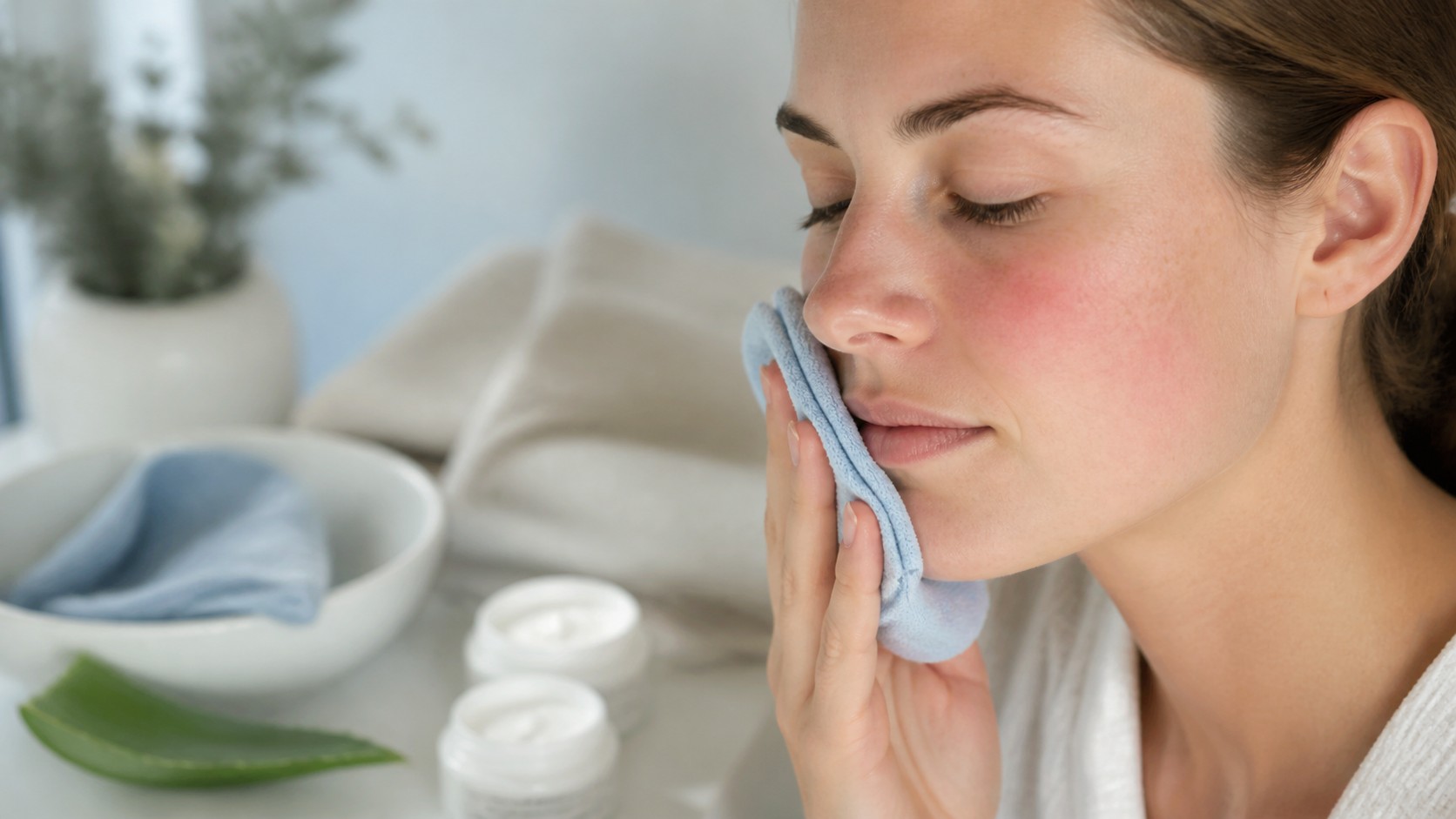
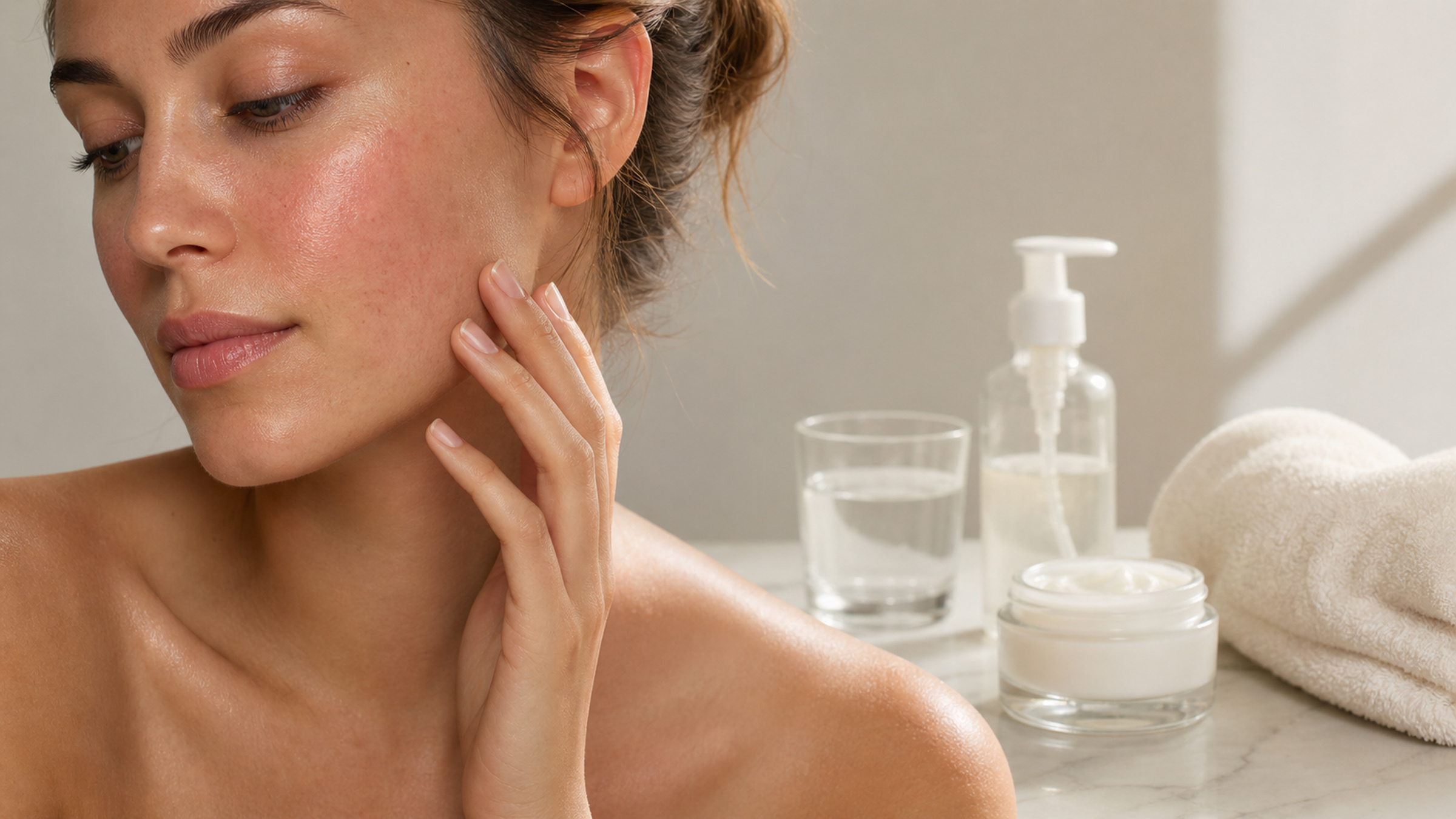
Sensitive skin is best understood as reactive skin with a short fuse. It may not be reacting to one single ingredient every time; it may be reacting to friction, temperature swings, exfoliation, low humidity, retinoids, acids, fragrance, or a cleanser that leaves the face feeling squeaky. The clues are often immediate. A product goes on, and within minutes there is prickling, burning, tightness, or a hot flush that fades after the skin calms down. That quick timing does not prove there is no allergy, but it often points toward irritation or barrier stress.
The most common mistake is trying to solve sensitivity with more products. Someone feels dry, so they add a serum. Then redness appears, so they add a calming mask. Then texture changes, so they exfoliate. Before long, the skin is reacting to the routine as a whole, not just to one villain. Sensitive skin usually improves when the routine gets boring in the best possible way: gentle cleanser, plain moisturizer, sunscreen, and enough time for the barrier to settle.
What Makes an Allergic Reaction Different
An allergic skin reaction is more targeted. It happens when the immune system recognizes a substance as an allergen and mounts a response. In skincare and cosmetics, common culprits can include fragrance components, preservatives, hair dye ingredients, certain botanical extracts, nail product ingredients, and some topical medications.
Unlike a simple sting from an acid toner, allergic contact dermatitis often shows up later. The skin may become itchy, swollen, bumpy, scaly, or rash-like after repeated exposure, even if the product seemed fine at first. The delayed timing is what confuses people.
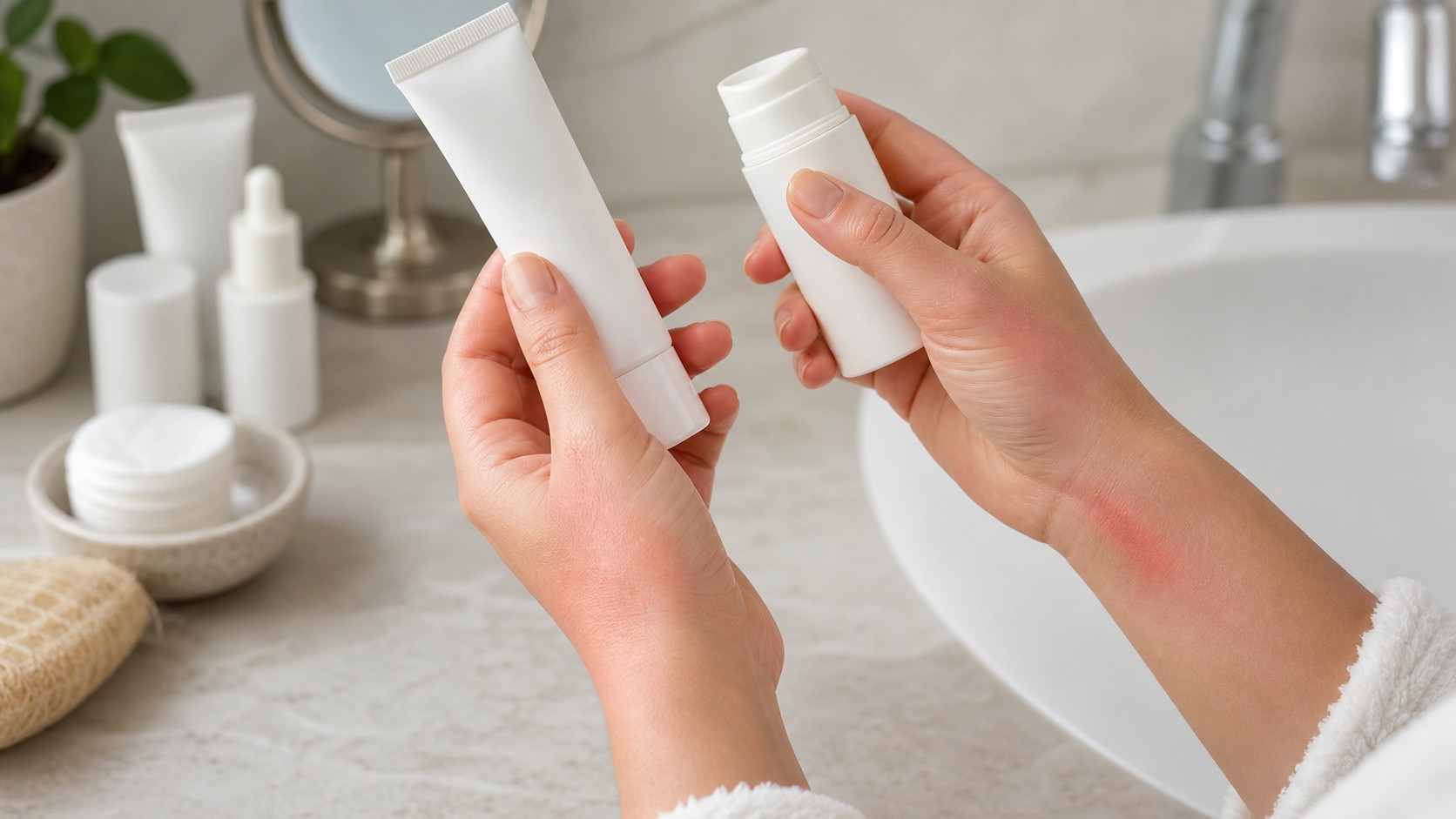
You might use a product on Monday, feel normal, and notice a rash on Wednesday. You might also react on the eyelids even though the product was applied to the hands or hair, because transfer is sneaky. Allergy does not always stay politely where the product touched. That is why a reaction pattern, not just a single moment of discomfort, matters.
Stinging Does Not Always Mean Allergy
Many people assume that if a product burns, they must be allergic to it. Sometimes that is true, but often it is irritation. A compromised barrier allows ingredients, even otherwise ordinary ones, to feel sharper. Vitamin C, exfoliating acids, benzoyl peroxide, retinoids, foaming cleansers, and alcohol-heavy formulas can sting sensitive skin without involving the immune system. The sensation is real, but the mechanism is different. A useful question is whether the reaction is mainly sensation or visible inflammation. Burning that fades quickly after rinsing or moisturizing leans irritation. Itching, spreading rash, swelling, crusting, or repeated eruptions in the same pattern raise more suspicion for allergy. No single home observation is perfect, but this split helps you avoid over-labeling every tingle as an allergy.
Where the Reaction Appears Can Offer Clues
Sensitive skin often reacts in high-exposure zones: cheeks, around the nose, chin, or anywhere the barrier is naturally thinner or more exposed to wind and cleansing. It may look like general redness, dryness, or a glassy tight surface. Allergic reactions can be more oddly placed. Eyelids are a classic example because they are thin and easy to contaminate with nail polish ingredients, hair products, fragrance, or hand creams. The neck, lips, underarms, and hands are also common reaction areas.
Patterns matter more than panic. A rash that appears exactly where a new adhesive, hair dye, perfume, or balm touched deserves a different level of suspicion than cheeks that flush after a hot shower. If the same product repeatedly creates the same visible problem, stop using it and keep the packaging or ingredient list. That information can become useful later.
How to Simplify Without Losing Your Mind
When skin is angry, the best first move is usually subtraction. Pause new actives, scrubs, peel pads, masks, fragranced extras, and experimental products. Keep only what is necessary: a mild cleanser if needed, a bland moisturizer, and daytime sun protection that your skin tolerates. Give the skin several days to calm before making conclusions. If the reaction is severe, spreading, blistering, or near the eyes, skip the experiment phase and seek medical guidance. Reintroduction should be slow enough to teach you something. Bring back one product at a time and wait several days before adding another. If you restart five favorites on the same night, you will not know which one caused trouble. Sensitive skin rewards patience. Allergic skin demands evidence.
Patch Testing at Home vs. Professional Patch Testing
Home patch testing can help with irritation risk, but it has limits. Applying a small amount of a product to the inner arm or behind the ear for a few days may reveal obvious problems before the product reaches your face. Still, the face is not the arm.
Facial skin is more reactive, and allergic reactions can be delayed or dependent on repeated exposure. A home test is a screening tool, not a final verdict. Professional patch testing is different from a quick dab test.
Dermatology offices can apply standardized allergens to the back and read the skin over a set schedule. This can identify specific allergens, which is especially valuable when reactions keep returning and the ingredient lists feel impossible to decode. If you have repeated eczema-like flares, eyelid rashes, or reactions to many unrelated products, professional testing may save months of guessing.
Ingredients That Deserve Extra Attention
Fragrance is one of the most common trouble zones because it can involve many aroma compounds under one simple word. Essential oils are not automatically gentler; they are fragrance components too. Preservatives, lanolin, propolis, formaldehyde releasers, methylisothiazolinone, and some sunscreen filters can also bother certain people. That does not mean everyone should fear every ingredient. It means that repeated reactions deserve a closer look at categories, not just brand names.
For sensitive skin, the safer direction is often fragrance-free, dye-free, and low-complexity. For allergic skin, the safest direction is specific avoidance. If you are allergic to a preservative, a beautiful minimalist bottle can still be a problem. If you are merely irritated by overuse of acids, that same preservative may be irrelevant. Precision keeps you from shrinking your routine more than necessary.
Common Scenarios That Confuse People
A cleanser that burns only after a week of exfoliation is probably not telling the same story as a hand cream that causes an itchy rash every time it touches the wrists. A sunscreen that makes the eyes water on hot afternoons may be migrating into a delicate area rather than creating a true allergy. A lip balm that leaves the mouth rim flaky, however, may deserve closer ingredient attention, especially if the same flavoring or fragrance appears in several tubes. Real routines create mixed clues, which is why timing, location, and repeat behavior matter more than one dramatic moment. Another confusing scenario is the product that worked for years and suddenly seems impossible to wear. Formulas can change, but skin can change too. A damaged barrier, new medication, seasonal dryness, hormonal shifts, or a new leave-on active can make an old favorite feel harsher. Before declaring a lifelong allergy, look at what changed around the product as well as inside it.
How to Talk About Reactions Clearly
When you ask for help, the words you use can make the conversation more useful. Instead of saying “I am allergic to everything,” describe what happens: burning within five minutes, itching the next day, swelling around the eyes, peeling at the corners of the mouth, or red patches exactly where a product sat. Mention whether the reaction fades after rinsing or lingers for days. Those details help separate irritation, allergy, rosacea, eczema, acne flares, and other lookalikes.
It also helps to name the product category rather than the brand alone. A fragranced moisturizer, waterproof sunscreen, lash glue, gel nail product, or hair dye each points to different likely culprits. Clear notes do not replace a dermatologist, but they make every appointment and every self-audit sharper.
Why Product Families Matter
Ingredient detective work gets easier when you group products by family. A reaction to a shampoo, leave-in conditioner, and perfume may point toward fragrance exposure rather than three unrelated failures. Trouble with several long-wear eye products may suggest adhesive, dye, resin, or preservative issues. Reactions from exfoliating toner, retinoid cream, and brightening serum may instead reveal that the barrier is overloaded by active steps. Seeing the family pattern keeps you from blaming the wrong product and helps you rebuild a routine with less fear, especially when several symptoms overlap at once unexpectedly.
When to Get Medical Help
Some reactions should not be managed with internet patience. Seek help quickly if swelling affects the lips, eyes, or face; if breathing feels difficult; if the rash is blistering, painful, infected-looking, or spreading fast; or if a child has a significant reaction. For recurring reactions, a dermatologist or allergist can help distinguish dermatitis, rosacea, eczema, acneiform irritation, and allergy. Those conditions can overlap, and the right diagnosis changes the plan.
There is no prize for suffering through a product. Skincare should support your skin, not turn your bathroom into a trial court every night. If your face keeps objecting, listen early.
The Smarter Way to Read Your Skin
The difference between sensitive skin and allergic skin is not about toughness. It is about mechanism. Sensitive skin is usually a threshold problem: the barrier is overwhelmed, the routine is too aggressive, or the environment is pushing the skin past comfort.
Allergic skin is a recognition problem: the immune system has flagged a specific substance. Once you understand that split, your decisions become calmer. You can simplify when the barrier needs rest, document patterns when allergy is possible, and ask for testing when the clues keep circling the same mystery.
Gloss Street’s best advice is to stop treating every reaction as a personal failure. Skin communicates through discomfort, redness, itching, and texture because that is the language it has. Your job is not to force it quiet. Your job is to notice the pattern, remove the pressure, and choose the next product slowly enough that your skin can answer clearly.