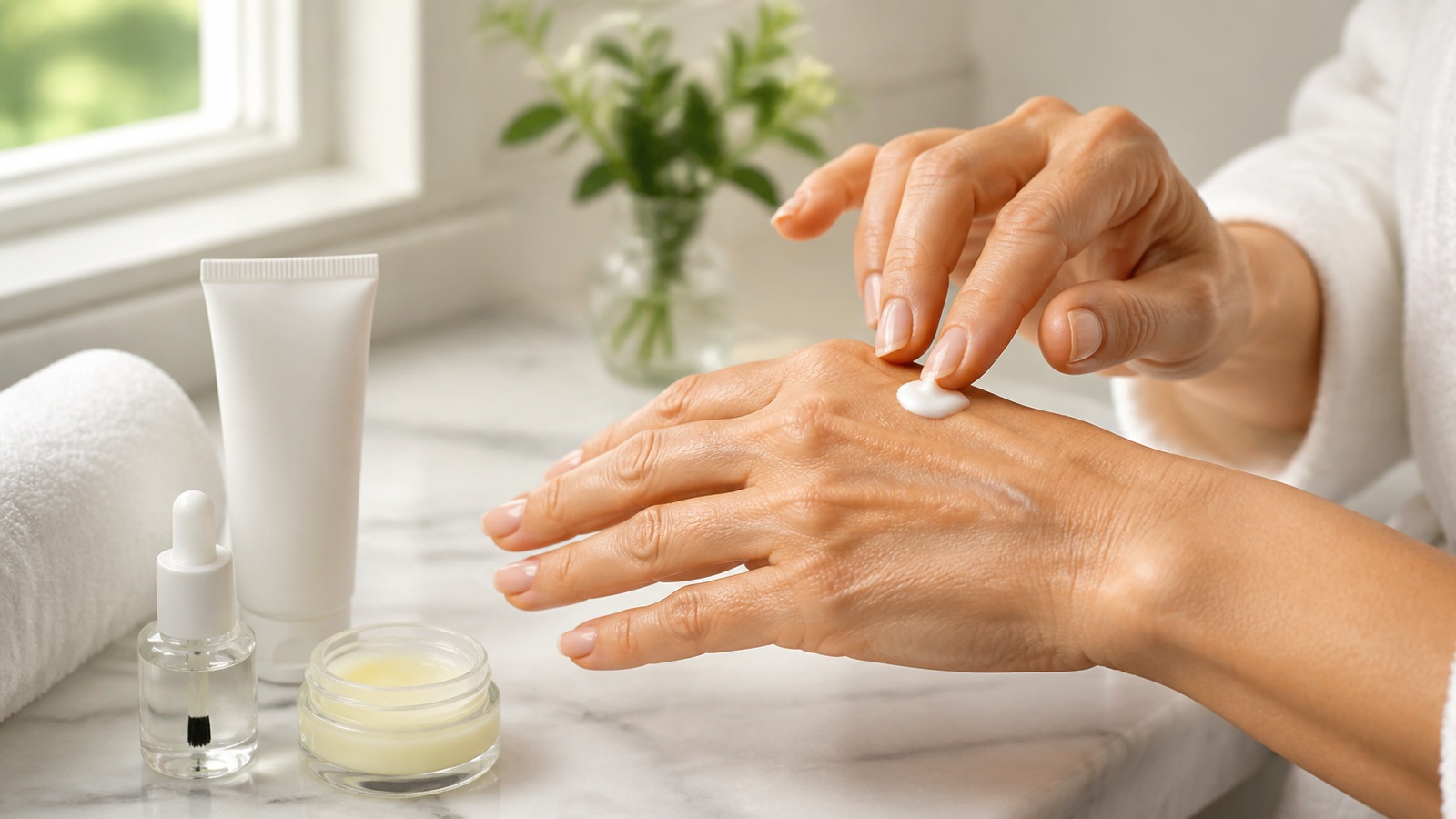
Hands Age Fast Because They Live in the World
Your hands are exposed to nearly everything your face is protected from: soap, sanitizer, dishwater, cold air, steering wheels, garden tools, cleaning products, sun through car windows, and constant friction. Then they are expected to look smooth with a quick swipe of lotion at bedtime. The mismatch is why hands often show age earlier than people expect. Thin skin, repeated UV exposure, low oil production, and daily barrier stress combine into crepiness, dark spots, rough texture, visible veins, and cracked cuticles. Reversing the signs is possible, but not with one miracle cream. The hands need a prevention-and-repair routine that treats them like high-use skin, not an afterthought.
A: It can improve dryness and texture, but SPF and targeted treatments are needed for spots and collagen damage.
A: They receive more washing, friction, and unprotected sun exposure.
A: Some hands benefit, but start slowly and repair cracks first.
A: They can improve with protection and treatment, but they fade slowly.
A: Some can work, but hands may need richer moisture and more barrier support.
A: Yes, especially during driving and outdoor errands.
A: Moisturizer can temporarily plump dryness, but long-term improvement needs consistency.
A: Yes. They prevent damage cream would otherwise have to repair.
A: Ask about painful cracks, recurring rashes, changing spots, or stubborn pigmentation.
A: SPF by day, cream after washing, gloves for chores, and richer repair at night.
Sun Exposure Is the Biggest Accelerator
The backs of the hands receive daily UV exposure during driving, walking, errands, gardening, and outdoor meals. Unlike the face, they are often left out of morning sunscreen. That repeated exposure contributes to brown spots, uneven tone, roughness, and collagen breakdown. Even people who never intentionally tan may collect hand damage through ordinary daily light.
The fix is not complicated, but it has to be consistent. Apply sunscreen to the backs of hands when they will be exposed, and reapply after washing if you remain outdoors. Keep a small sunscreen near the door, in a bag, or wherever you actually remember it. Hand aging prevention begins before spots appear.
Washing Strips the Barrier Again and Again
Hands are washed more than any other beauty zone. Soap and water remove dirt, but they also remove lipids that keep the barrier flexible. Sanitizer adds another drying pressure for many people. When the barrier is weakened, hands look older because fine lines become sharper, texture feels rougher, and small cracks make the surface look tired.
Moisturizing after washing is not indulgent. It is replacement care. A good hand cream puts back humectants, emollients, and occlusive ingredients so water does not leave the skin as quickly. The best tube is the one sitting near the sink, not the one saved for special occasions.
Volume Loss Makes Veins and Tendons More Visible
As skin and underlying support change with age, veins, tendons, and bones can appear more prominent. Moisturizer cannot fully replace lost volume, but hydration can make the skin look smoother and less papery. Sun protection helps slow the collagen damage that makes thinning more obvious. For people bothered by pronounced volume loss, dermatology offices may offer procedures such as fillers or other treatments, but daily prevention still matters afterward.
It helps to separate what products can and cannot do. Creams can improve dryness, texture, and barrier resilience. They can soften the appearance of fine lines caused by dehydration. They cannot rebuild hand anatomy overnight.
Dark Spots Need Both Prevention and Patience
Dark spots on the hands usually reflect a history of UV exposure and inflammation. Brightening ingredients can help, but they work slowly and unevenly if sunscreen is missing. Treating spots without daily SPF is like mopping while the faucet is still running. Vitamin C, niacinamide, retinoids, azelaic acid, and gentle exfoliants may improve the look of tone over time, but the hands must be protected from new exposure.
Because hand skin gets washed often, active products may not stay on long during the day. Nighttime is usually the better treatment window. Use brightening or smoothing ingredients carefully, then seal with a moisturizer that keeps the skin comfortable.
Retinoids Can Help, but Hands Need Respect
Retinoids are famous for facial anti-aging, and they can also support smoother-looking hands. The problem is tolerance. Hands are already exposed to soap, weather, and friction, so adding a strong retinoid too quickly can create peeling and irritation. Start slowly, use a small amount, and pair it with moisturizer. If your hands are cracked or inflamed, repair first and treat later.
Retinoids also make sunscreen more important. A nighttime smoothing routine should be matched with daytime protection, especially on the backs of hands. Otherwise, the treatment plan fights itself.
Cuticles Tell on the Whole Routine
Dry cuticles make hands look older even when the skin itself is not severely aged. They split, catch, peel, and create a neglected look around otherwise healthy nails. Cuticle oil, balm, or hand cream massaged into the nail folds can make a visible difference. The goal is not a salon-perfect manicure; it is flexible skin around the nails.
Harsh removers, picking, frequent gel services, and cleaning products can all worsen the cuticle area. Protecting the nail folds is part of hand anti-aging because the eye reads the whole hand at once.
Gloves Are More Powerful Than Expensive Cream
Gloves prevent damage before cream has to repair it. Use dish gloves for wet chores, cleaning gloves for detergents, warm gloves in cold weather, and gardening gloves for soil and friction. If rubber gloves irritate, try cotton liners. Preventing repeated exposure is often more effective than applying a luxury cream after every avoidable insult.
This is where hand care becomes practical. You do not need a complicated ritual every day. You need fewer episodes of barrier damage, more sunscreen, and cream placed where it will be used.
Professional Treatments Exist, but Maintenance Still Wins
Dermatologists can treat hand concerns with options such as lasers for spots, resurfacing for texture, fillers for volume, or prescription topicals for severe dermatitis. Those treatments can be valuable, but they are not substitutes for daily protection. A procedure can improve what is visible today; habits decide how quickly new signs appear.
Gloss Street’s hand-aging rule is simple: protect by day, repair after washing, treat slowly at night, and stop asking your hands to recover from everything alone. With consistent SPF, barrier care, gloves, and smart ingredients, hands can look softer, brighter, and more cared for without pretending they never worked a day in your life.
Build the Routine Around Real Moments
A realistic hand routine has anchors. Sunscreen before driving. Cream after washing. Gloves before cleaning. Rich repair before bed. Cuticle oil when nails look dry. These moments are easier to remember than vague advice to “take better care of your hands.” When the routine attaches to existing habits, it becomes less fragile.
If your hands already show age, do not treat that as failure. Treat it as information. The skin is showing you where protection was missing and where repair needs to become consistent. A few months of boring hand care can change texture and comfort more than a drawer full of forgotten creams.
Hand Care Has to Survive Repetition
The reason hand aging is so stubborn is repetition. A single hot wash does not age the hands in a visible way. Hundreds of washes, unprotected drives, cold mornings, cleaning sessions, and skipped moisturizer moments create the pattern. Reversal has to be repetitive too. One excellent hand mask cannot compete with daily barrier loss if nothing else changes. This is why simple steps done often beat dramatic steps done once.
Think of every hand-care choice as either subtracting stress or adding support. Gloves subtract detergent exposure. Sunscreen subtracts UV damage. Cream adds barrier support. Cuticle oil adds flexibility. Retinoids or brightening ingredients add targeted correction only when the skin is ready. That framework keeps the routine from becoming a random pile of products.
Texture Improvement Comes Before Spot Correction
Many people notice dark spots first, but rough texture often makes the hands look older than the spots themselves. Dry skin catches light unevenly, making lines and veins more obvious. Before chasing every mark with a brightening serum, improve the surface. Use hand cream after washing, seal cracked areas at night, and protect the barrier for several weeks. Once the skin is smoother, you can judge pigmentation more clearly.
This order also improves tolerance. Brightening ingredients and retinoids are easier to use on skin that is not cracked or inflamed. A repair-first strategy may feel slower, but it prevents the common cycle of treating spots aggressively, irritating the hands, and making them look older from inflammation.
Driving Exposure Deserves Special Attention
Driving is a quiet source of hand exposure because it feels like indoor time. The hands sit near glass, often in the same position, collecting light repeatedly. People who commute or drive during bright hours may see more spots on the hand that receives more sun. Sunscreen before driving is one of the easiest upgrades because it targets a predictable exposure window.
For longer drives, consider fingerless UV gloves or a lightweight driving layer if sunscreen feels inconvenient. The solution does not have to be glamorous. It has to be repeatable enough to become automatic.
Ingredient Strength Should Match Hand Condition
When hands are comfortable but dull, a gentle retinoid or brightening ingredient may be reasonable. When they are split, itchy, or burning, bland repair is the better choice. The same ingredient can be helpful in one season and too much in another. Winter hands often need more occlusion and less experimentation. Summer hands may need more SPF and lighter textures.
Let condition guide strength. If a product stings every night, the routine is not anti-aging; it is creating inflammation. Healthy-looking hands come from well-timed treatment, not constant intensity.
Do Not Let Perfect Become the Enemy of Better
Hand aging can feel discouraging because the hands are always visible and always in use. You may apply cream and then wash it off ten minutes later. You may remember sunscreen after the drive is already over. That does not make the effort pointless. Hands improve through averages. If you protect them more often this month than last month, the routine is moving in the right direction.
Start with the biggest leaks in your current habits. If you never use SPF on your hands, fix that first. If your knuckles crack every winter, put cream and gloves near the places where damage happens. If dark spots are your main concern, pair treatment with daily protection before expecting visible change.
Reversal also depends on realistic expectations. Brown spots fade slowly. Texture improves faster when dryness is part of the problem. Cuticles can look better within days of consistent oil or balm. Volume changes may need professional options if they bother you deeply. Knowing which sign responds to which solution keeps you from blaming a hand cream for a job it was never designed to do.
How Long Before Hands Look Better?
Comfort can improve quickly, sometimes within a few days of consistent cream and less harsh washing. Texture usually takes longer because the barrier needs repeated support. Dark spots and crepiness are slower still, especially if sun exposure continues. Give a new hand routine at least eight to twelve weeks before judging tone and texture, unless irritation appears sooner.
Take a photo in the same light before starting. Hands are easy to over-scrutinize day by day, but photos reveal gradual changes more fairly. Look for fewer cracks, softer cuticles, less tightness after washing, and a smoother surface before expecting every spot to disappear. Progress on hands is often quiet, but quiet progress still counts.
The smallest reliable change is hand sunscreen in daylight. Add that, and every repair step has a better chance to show.