Mascara Flaking Is Usually a Formula, Lash, and Wear-Time Problem
Mascara flakes when the dried film on the lashes becomes too brittle, too heavy, poorly bonded, or disrupted during the day. That sounds simple, but the reason one mascara stays smooth while another sprinkles black specks under the eyes can involve waxes, polymers, pigment load, lash prep, humidity, oil, layering habits, brush design, and how long the tube has been open. Flaking does not automatically mean a mascara is cheap or bad. It usually means the formula is not matching the way your lashes move, the products around your eyes, or the conditions it has to survive.
A: That eye may water more, get rubbed more, or sit above oilier skin.
A: Yes. As the tube dries, the film can become clumpier and more brittle.
A: No, but they often help when regular formulas shed or smudge.
A: Sometimes, though it can feel stiffer and require tougher removal.
A: Usually no. Extra powder can create a drier, more breakable coat.
A: The fibers may not be binding well, or too many coats may be lifting them loose.
A: Yes. Oil or slip near the lash line can weaken adhesion.
A: Use fewer coats, wipe the wand, and replace any tube that has thickened.
Mascara Works by Building a Flexible Film
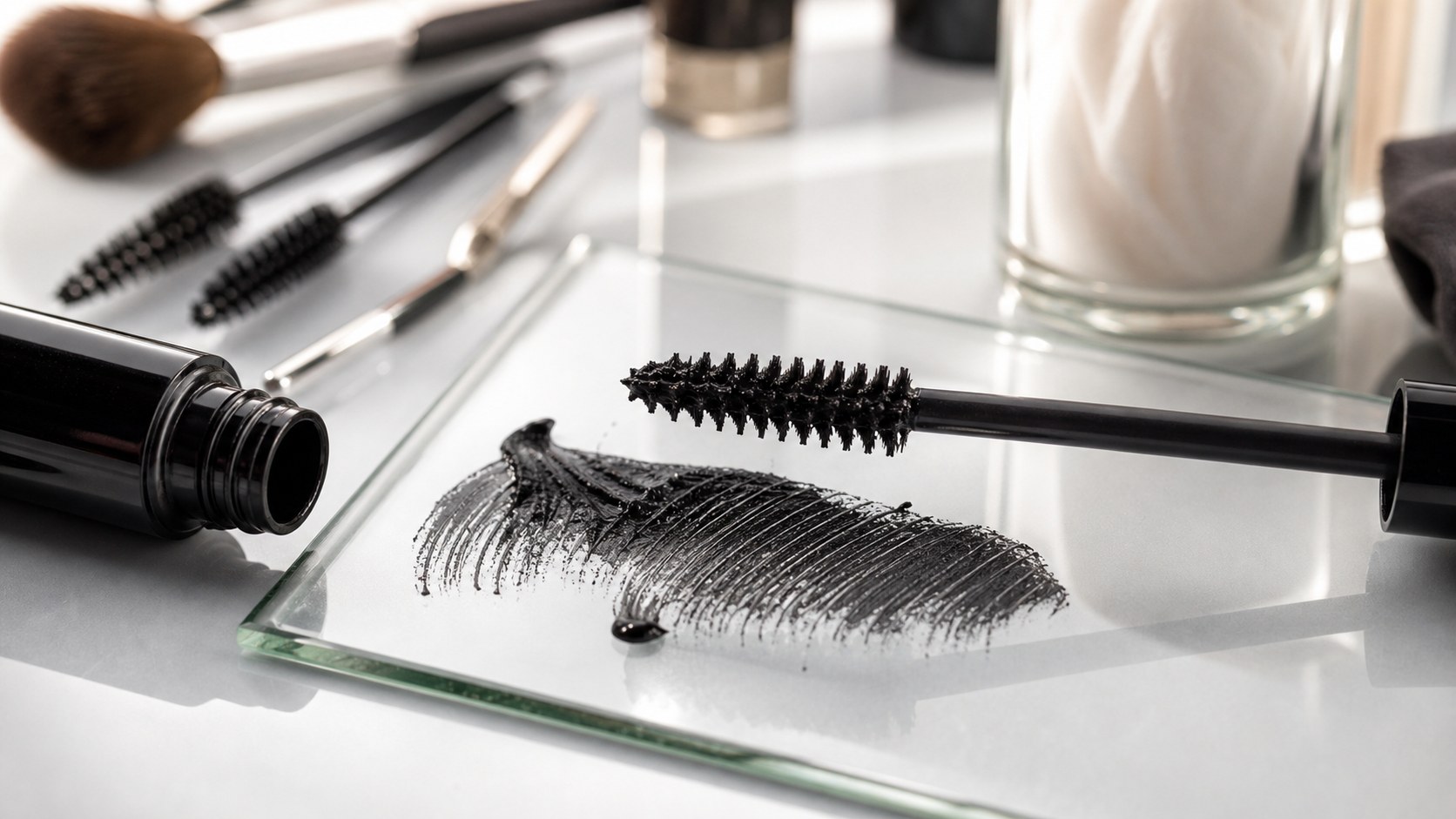
A good mascara does more than paint lashes black. It coats each lash with a mixture of pigments, waxes, film formers, polymers, and conditioning agents that dry into a flexible layer. That layer has to grip the lash, hold shape, resist smudging, and move every time you blink. If the film dries too hard, it can crack. If it dries too soft, it can smudge. The best mascaras balance flexibility and hold so the coating bends with the lash instead of breaking away in tiny pieces.
This is why two mascaras can look similar at first application and behave very differently six hours later. One may create a smooth elastic sleeve around the lash, while another builds a dramatic but fragile shell. The dramatic shell may look amazing in the mirror right after application, especially if it gives instant volume, but it may not tolerate blinking, wind, watery eyes, or face movement. Flaking is often the delayed cost of a film that looked impressive before it had to live on the eye.
Formula chemistry matters because lashes are small moving surfaces. A mascara has very little room for error. The coating must be thin enough to flex, strong enough to hold pigment, and light enough not to drag the lash downward. When that balance fails, flakes are the visible clue.
Dry, Brittle Formulas Are More Likely to Break Apart
Some mascaras flake because they dry down too stiff. A formula designed for sharp separation or intense lift may rely on ingredients that set quickly and firmly. That can be useful for holding curl, but it can also create brittleness if the coating does not retain enough flexibility. Once the lashes bend during blinking or facial expression, the dried layer can fracture and fall.
The same thing can happen when a tube gets old. Every time mascara is opened, air enters the tube and the formula slowly loses moisture and freshness. A mascara that wore beautifully during the first few weeks may begin to clump, drag, and flake later because the product has thickened. Pumping the wand makes this worse by pushing more air into the tube. If flakes started after weeks of good wear, age may be the real issue.
Application texture is a clue. If the mascara feels dry on the wand, skips during application, leaves crumbly edges, or requires pressure to coat the lashes, the film may already be heading toward flaking. Adding more layers can make it worse because fresh product is being stacked over a dry, uneven base. The result is not better volume; it is more material available to crack.
Too Much Product Can Turn Volume Into Fallout
Volumizing mascara often contains more waxy or body-building ingredients to make lashes look thicker. Used well, that can create a plush lash line. Used heavily, it can build a coating that is too bulky for the lash to support smoothly. The outer layer dries around uneven clumps, and those clumps are more likely to crumble during the day. Flaking can be the difference between one generous coat and three rushed coats.
Layer timing matters. Applying a second coat while the first is still slightly flexible can help the layers merge. Applying a wet coat over a fully dry coat can create a separate shell that sits on top rather than bonding cleanly. That top layer may look bold at first, but it is often less stable. If you like multiple coats, work eye by eye instead of letting each coat completely set before returning.
The brush also controls how much product reaches the lashes. A dense brush may deposit a lot quickly, while a comb-style brush may separate and remove excess. If your favorite mascara flakes, try wiping the wand gently on the tube opening or a clean tissue before applying. Less product can sometimes give better wear because the film is thinner, smoother, and less likely to shed.
Oil, Skincare, and Eye Cream Can Weaken Wear
Mascara does not sit in isolation. It has to coexist with eye cream, sunscreen, concealer, foundation, setting spray, facial oil, tears, sweat, and natural skin oils. Rich products around the eyes can migrate onto lashes and interfere with how mascara grips. Even if the formula itself is not flaky, the coating may soften unevenly, lose adhesion, or collect powder and pigment that later fall under the eyes.
This is especially common when eye cream is applied close to the lash line in the morning. A nourishing cream may be wonderful at night but too emollient under daytime mascara. Sunscreen can create a similar issue if it migrates into the eye area or leaves a slick film on the lashes. The fix is not necessarily skipping skincare. It is giving products time to settle, using lighter textures near the lashes, and keeping creams away from the lash hairs themselves.
Concealer and powder can contribute too. Powdery under-eyes can catch tiny mascara fragments and make flaking look worse. Creamy concealer that never sets can make mascara transfer or loosen. The eye area works best when the layers are compatible: moisturized but not greasy, set but not dusty, and free of product sitting directly on the lashes.
Lash Prep Changes How Mascara Holds
Mascara adheres better to clean lashes. If lashes still have cleanser residue, old mascara, oil, micellar water, lash serum, or eye cream on them, the new coating may not attach evenly. That weak attachment can show up as flakes later in the day. A quick rinse after micellar water and a gentle dry-down before makeup can make a surprising difference.
Curling technique can also affect flaking. Curling after mascara has dried is one of the easiest ways to crack the film. The curler presses a hard edge into the coating, and tiny pieces can break off immediately or later. Curl lashes before mascara, then apply thin layers. If lashes fall quickly, consider whether the formula is too heavy or too wet for your curl rather than crushing the dried mascara with a tool.
Primer is more complicated. Some lash primers improve grip and volume, but others create a powdery or fibrous base that makes flaking worse with the wrong mascara. If your mascara flakes only when paired with primer, the combination is probably the problem. A primer and mascara need to dry into one flexible system, not two competing layers.
Waterproof, Tubing, and Washable Mascaras Flake Differently
Waterproof mascaras are often better at resisting tears, sweat, and humidity, but they can still flake if the film is too stiff or overbuilt. Their durability comes with tradeoffs: they may feel drier, require more careful removal, and become brittle on some lashes. A waterproof label does not guarantee flake-proof wear. It mainly tells you the formula is designed to resist water better than a standard washable formula.
Tubing mascaras behave differently because they form little polymer sleeves around the lashes. Many people like them because they resist smudging and remove with warm water. When they fail, they may come off in visible tiny tubes rather than smoky smears. That can look like flaking, but the mechanism is different. For people with oily lids or frequent smudging, tubing formulas may still be the cleanest option.
Washable mascaras can be more comfortable and easier to remove, but some are more vulnerable to watery eyes, humidity, or long wear. The right category depends on the person. Someone with dry eyes may need a flexible washable formula that does not shed. Someone with oily lids may need tubing technology. Someone who cries easily at weddings may want waterproof, but with gentle removal afterward.
Weather and Wear Time Can Expose a Weak Formula
A mascara that behaves indoors for four hours may struggle during a long day outside. Heat can soften surrounding makeup, humidity can affect curl and film behavior, and cold wind can make eyes water. Even air conditioning can dry the eye area and encourage rubbing. Flaking is often a wear-time failure, not an application failure. The formula may look perfect at 8 a.m. and reveal its limits at 4 p.m.
Eye rubbing is another practical factor. Allergies, contact lenses, dry eyes, and long screen days can make people touch their eyes without realizing it. Rubbing breaks the mascara film mechanically. If flakes appear mostly after watery or itchy-eye days, the mascara may be only part of the story. Treating the comfort issue can improve makeup wear more than switching formulas repeatedly.
Long-wear claims should be interpreted realistically. A mascara can be long-wearing under normal conditions and still fail during sweat, tears, oil migration, or heavy layering. The best test is your actual day, not the marketing promise. If a formula flakes only during specific conditions, you may need a different mascara for those days rather than replacing your everyday favorite.
How to Choose a Mascara That Flakes Less
Start by matching the formula to the problem. If your mascara flakes because it feels dry and crunchy, look for flexible, conditioning, or tubing formulas instead of ultra-dry volume formulas. If flakes appear after heavy layering, choose a mascara that builds cleanly in one or two coats. If oil around the eyes is the issue, consider tubing or a more transfer-resistant formula and adjust eye-area skincare.
Pay attention to the wand. A brush that overloads lashes can make even a good formula perform poorly. Short bristles, comb wands, and tapered brushes often give more control, while oversized fluffy brushes can create instant fullness but also excess product. The best wand is the one that lets you coat from root to tip without leaving blobs at the lash ends.
Also respect the tube’s lifespan. If a mascara changes smell, texture, or performance, replace it. Most mascaras are not meant to be stretched for months beyond their comfortable window. Freshness matters because the formula was designed to work at a certain consistency. Once it thickens, flakes are more likely.
A Better Application Routine Can Prevent Fallout
Begin with clean, dry lashes. Curl before mascara if you curl at all. Apply the first coat from the roots with a gentle wiggle, then pull through the tips without repeatedly painting the ends. Heavy tips weigh lashes down and are prone to crumbling. If you want a second coat, add it while the first coat is still flexible enough to merge smoothly.
Use less product on the lower lashes, where flakes are easiest to see. A tiny amount on the wand tip or a separate clean spoolie can define lower lashes without creating little deposits that drop onto concealer. If your lower lashes always flake, skip mascara there and let liner or upper-lash definition do the work. Not every eye needs product on every lash.
At the end of the day, remove mascara gently. Harsh removal can damage lashes and leave residue that affects the next application. Hold remover on the lashes long enough to dissolve the formula, then wipe softly. Clean lashes tomorrow begin with careful removal tonight.
The Bottom Line on Flaky Mascara
Some mascaras flake because the formula dries too brittle, the tube is old, too much product is layered, or the film does not bond well to the lashes. Others stay smooth because they create a flexible coating that can survive blinking, oil, humidity, and normal movement. The difference is chemistry, application, and context working together.
If your mascara flakes, do not assume your lashes are the problem. Try cleaner lash prep, thinner coats, better layer timing, lighter eye-area skincare, and a formula category that matches your wear conditions. The best mascara is not just the one that looks dramatic in the first five minutes. It is the one that still looks intentional at the end of the day.