Vitamin C Results Depend on the Formula Surviving Long Enough to Work
Vitamin C is one of skincare’s most famous brightening ingredients, but its reputation can make the category sound simpler than it is. The result you see depends on the type of vitamin C, how stable the formula is, how well it reaches the skin, whether your barrier tolerates it, and whether sunscreen protects the progress during the day. A good vitamin C product is not just a bottle labeled antioxidant. It is a formula that keeps the active useful from shelf to skin and fits your routine well enough to be used consistently.
A: L-ascorbic acid is the classic potent form, but strength only helps if your skin tolerates it.
A: Oxidation from air, light, heat, or time may have degraded the formula.
A: Yes, especially low-pH or high-strength formulas on sensitive or barrier-damaged skin.
A: They can, although they may feel slower or work through different formula pathways.
A: Morning is common because it pairs well with sunscreen, but formula tolerance matters.
A: Modern formulas can often coexist, but irritation and texture compatibility matter most.
A: Glow may appear sooner, while tone and spots usually need weeks to months.
A: No, sunscreen is still essential for protecting skin and preserving brightening progress.
A: Choose a strength your skin tolerates and a formula that stays stable and wearable.
A: Buying for hype while ignoring oxidation, irritation, sunscreen, and consistency.
Vitamin C Is Popular Because It Does Several Jobs
Vitamin C is valued because it can support a brighter-looking complexion, help soften the look of uneven tone, and act as an antioxidant in the skin’s daily environment. It is often used in morning routines because antioxidants pair logically with sunscreen and daytime exposure. That does not mean vitamin C replaces sunscreen. It supports a protection-minded routine while SPF does the direct UV-defense work.
The ingredient is also connected to collagen support, which is why it appears in many firming and anti-aging conversations. In real skincare, those benefits depend on form, concentration, delivery, and patience. A poorly stored or poorly tolerated product will not behave like the ideal ingredient described in a lab explanation. The formula has to survive real life.
This is why shoppers can have wildly different experiences. One person sees a fresher glow in a month, while another gets stinging, oxidation, or no visible change. Vitamin C is not a single experience. It is a family of formula choices.
L-Ascorbic Acid Is Potent but Demanding
L-ascorbic acid is the classic active form of vitamin C used in many high-performance serums. It can be effective, but it is also famously difficult to formulate because it is sensitive to light, air, pH, and time. Many L-ascorbic acid products use an acidic pH to support penetration, which can make them feel tingly or irritating for some skin types. Potency and tolerance have to be balanced.
A strong L-ascorbic acid serum may suit resilient skin that wants visible brightening support and can tolerate a low-pH formula. Sensitive, rosacea-prone, very dry, or barrier-damaged skin may find it too sharp. If a product burns every morning, the issue is not that your skin is failing at skincare. The formula may simply be too intense for your current barrier.
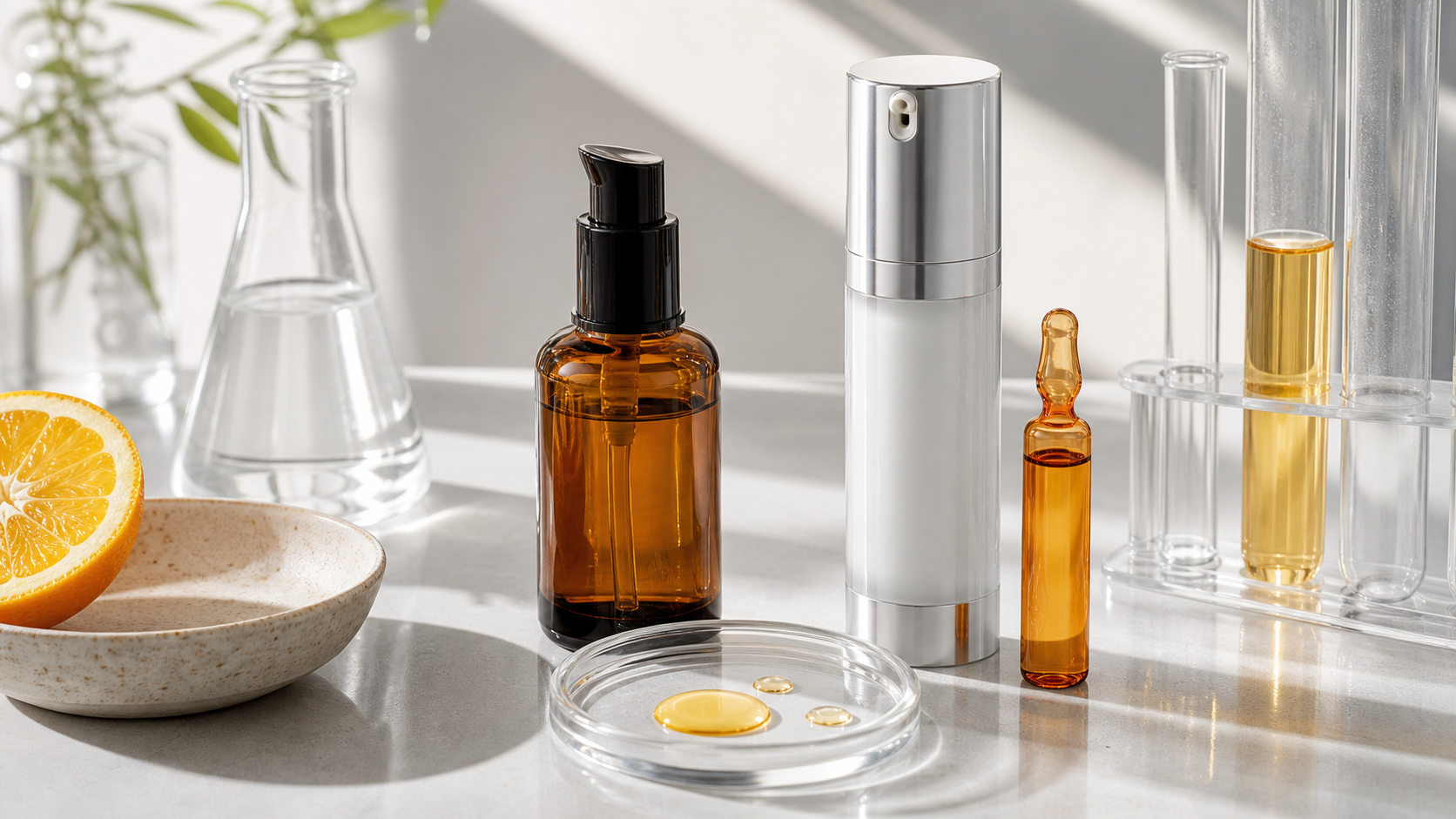
Packaging matters especially with L-ascorbic acid. Dark or opaque bottles, air-limiting pumps, small bottle sizes, and careful storage can all help. If a serum turns deep orange or brown, smells off, or changes texture, it may have oxidized significantly. A slightly golden tint is common in some formulas, but dramatic darkening is a warning sign.
Texture is another clue. Some classic vitamin C serums feel watery and fast, while others feel slightly tacky because of solvents or supporting antioxidants. A little tackiness is not automatically bad, but it becomes a problem if sunscreen balls up or makeup separates. For a morning ingredient, elegance matters because the product has to sit under the rest of the day.
Derivatives Trade Speed for Comfort and Stability
Vitamin C derivatives are modified forms designed to be more stable, more comfortable, or easier to include in different textures. Examples include sodium ascorbyl phosphate, magnesium ascorbyl phosphate, ascorbyl glucoside, tetrahexyldecyl ascorbate, and 3-O-ethyl ascorbic acid. They do not all behave identically, and they may need conversion or different conditions to deliver benefits. Their appeal is that many are easier to tolerate than strong L-ascorbic acid.
A derivative can be a smart choice when a classic serum stings or oxidizes too quickly in your routine. It may feel slower, but slow is not bad if the product gets used consistently. Skincare results often come from months of tolerable use rather than two weeks of heroic irritation. A gentle derivative that fits your face can outperform a famous formula you abandon.
The surrounding formula still matters. A derivative in a poorly designed product is not automatically better than L-ascorbic acid, and a classic serum is not automatically superior. Look at texture, packaging, supporting antioxidants, moisturizing ingredients, and how the product behaves under sunscreen. Vitamin C success is formula-level, not name-level.
Derivatives can be especially useful for people who want vitamin C in a moisturizer, cream, or oil-based texture. Tetrahexyldecyl ascorbate, for example, is often used in richer formulas that appeal to dry skin. Sodium ascorbyl phosphate may appear in lighter acne-friendly products. These choices change how vitamin C feels, not only how it performs on paper.
Stability Is About Packaging, Color, and Habits
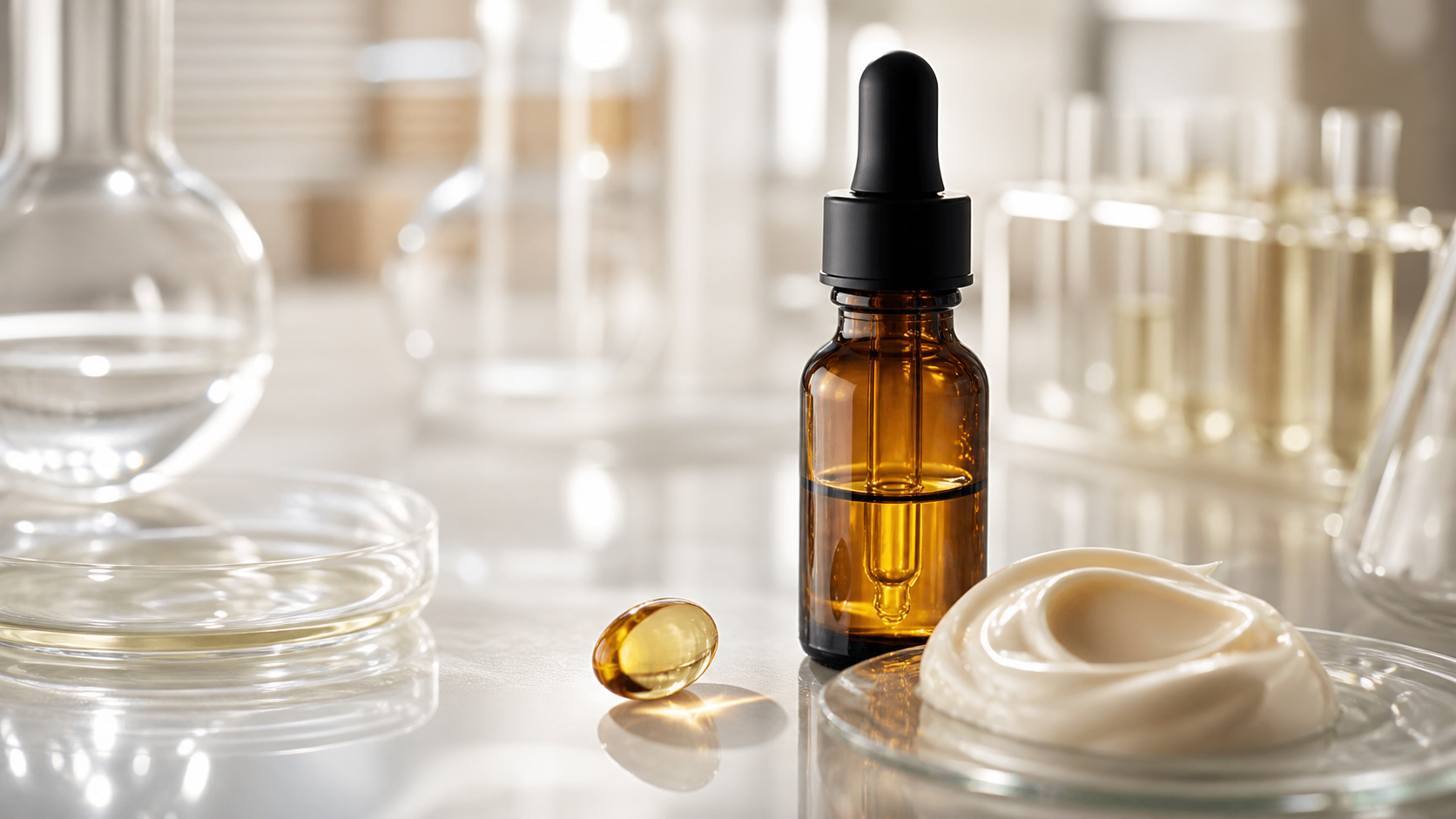
Vitamin C can degrade when exposed to air, light, and heat. That is why packaging is more than decoration. Clear jars, loose lids, and warm bathroom counters are not ideal for fragile formulas. A pump or opaque dropper bottle stored away from heat and sunlight gives the serum a better chance. Your storage habits are part of the product’s performance.
Use the product consistently after opening instead of saving it for a mythical perfect moment. Fragile serums do not improve with age. If you buy vitamin C, build it into the routine and monitor the color and smell. A product that oxidizes before you finish it may not be the right size, packaging, or formula type for you.
Stability also affects the user experience. Oxidized formulas can become less effective and may stain the skin or leave an orange cast. If you notice palms, nails, or the face taking on a rusty tint, inspect the serum. The problem may be product degradation rather than your skin tone changing.
Absorption Depends on More Than Concentration
High percentage claims attract attention, but concentration is not the whole story. The form of vitamin C, pH, solvent system, supporting ingredients, and skin condition all affect how a product performs. A high-strength serum that sits sticky on the surface may not be better than a moderate formula that layers well and gets used daily. Absorption is a formula behavior, not a number on a box.
Skin prep can help or hurt. Applying vitamin C to clean dry skin may suit some L-ascorbic acid formulas, while other products layer better after a hydrating step. If the serum stings, pills, or conflicts with sunscreen, adjust the amount or order. The perfect scientific concentration does not matter if the product never sits comfortably on your face.
Barrier condition is part of absorption too. Irritated skin may let products feel more intense while giving you worse tolerance. A calmer barrier often handles active ingredients more predictably. Sometimes the fastest route to better vitamin C results is repairing the routine around it.
This is why percentage shopping can be misleading. A twenty percent formula that irritates you into using it twice a month is not necessarily more effective than a ten percent formula used consistently. A derivative listed without a dramatic percentage can still be useful if the full formula is stable and pleasant. The skin only benefits from the product that actually makes it through your routine.
Results Are Usually Gradual and Sunscreen-Dependent
Vitamin C is often used for glow, dullness, post-acne marks, uneven tone, and early photoaging concerns. Some people notice brightness quickly because hydrated antioxidant serums can improve surface radiance. More stubborn discoloration takes longer and depends heavily on sunscreen. If UV exposure keeps triggering pigment, vitamin C is working against a moving target.
Expect weeks to months, not overnight transformation. Take photos in similar light if you are tracking dark spots or dullness. Daily mirror checks can be misleading because small improvements are hard to notice. Consistency, sunscreen, and patience matter more than switching serums every time a new one trends.
Vitamin C also has limits. It will not erase deep wrinkles, replace procedures, or fully correct melasma alone. It can be a useful part of a brightening and protection routine, but it is not a complete treatment plan for every pigmentation concern. Realistic expectations make the product easier to judge fairly.
Post-inflammatory marks are a good example. Vitamin C may support a brighter, more even look, but every unprotected sunny day can deepen or prolong discoloration. If marks seem stuck, review sunscreen amount, reapplication, and other pigment triggers before assuming the vitamin C has failed. Brightening routines are won in the morning as much as in the serum step.
Layering Should Keep the Morning Routine Wearable
Many people use vitamin C in the morning after cleansing and before moisturizer and sunscreen. That order often works, but it is not mandatory for every product. If your vitamin C is oily, creamy, or irritating, placement may need adjustment. The rule is to keep sunscreen application generous and even. No serum should make SPF harder to use.
Vitamin C can pair well with vitamin E, ferulic acid, niacinamide, hyaluronic acid, and sunscreen depending on the formula. Old myths about niacinamide and vitamin C being universally incompatible are overstated for modern products. The bigger issue is irritation and texture compatibility. If layers pill or sting, simplify before blaming a famous ingredient pairing.
Gloss Street’s take is that vitamin C works best when it is chosen like a formula, not a buzzword. Pick the form your skin can tolerate, protect it from oxidation, use it consistently, and let sunscreen preserve the results. Stability, absorption, and results are connected from the first pump to the final layer of SPF.
When Vitamin C Is Not the Right First Active
Vitamin C is popular, but it is not always the first active a routine needs. If the skin barrier is burning, flaky, or reactive, gentle cleanser, moisturizer, and sunscreen should come first. If acne is the main concern, an acne-specific active may be more direct. If dehydration is the issue, humectants and barrier support may produce a more obvious improvement.
This does not make vitamin C unnecessary. It means the ingredient performs better when the routine around it is ready. A calm barrier tolerates active ingredients more predictably, and a consistent sunscreen habit protects the brightening work. Skincare order is not only product order; it is priority order.
How to Decide Whether to Repurchase
Repurchase should be based on stability, tolerance, texture, and visible usefulness. Did the serum stay a reasonable color until the end? Did it layer under sunscreen without pilling? Did your skin look brighter or more even after consistent use? Did irritation stay low enough that you actually wanted to apply it?
If the answer is no, change the formula type rather than giving up on the whole category. A derivative, a lower strength, a creamier base, or better packaging may fit better. Vitamin C is a category with many personalities. The right one should feel like a routine step, not a daily negotiation.
Repurchasing can also depend on how the product ages in your specific home. A serum that stays fresh in a cool drawer may oxidize faster in a warm sunny bathroom. If you love the results but the product turns before you finish it, try a smaller bottle, pump packaging, or a more stable derivative. The best vitamin C is not only effective on day one; it remains usable long enough to justify the routine.