Packaging Is Now Part of the Clean Beauty Promise
Clean beauty no longer begins and ends with the ingredient list. Shoppers are looking at the bottle, cap, carton, refill, shipping wrap, and disposal instructions with the same skepticism they bring to formula claims. Green packaging is rising because consumers want beauty products that feel thoughtful from first use to final empty. The challenge is making packaging that is lower waste, protective, beautiful, and honest about tradeoffs.
A: No. Glass is recyclable and beautiful, but weight and breakage create tradeoffs.
A: They are better when they use less material and customers actually reuse the original container.
A: It means the material can be processed in an appropriate recycling system, which varies by location.
A: It can be, but it should serve a real function rather than act as decoration.
A: Greenwashing happens when a brand makes vague environmental claims without practical evidence.
A: Sometimes, but formula protection and actual disposal options still matter.
A: They can be helpful when they replace unnecessary plastic and avoid problematic coatings.
A: They should explain materials, refills, disposal instructions, and tradeoffs clearly.
A: Buy products you will finish, follow disposal instructions, and use refills when they are practical.
A: The future is smarter packaging matched to formula needs and real customer behavior.
Green Packaging Is Becoming a Beauty Standard
Clean beauty used to focus mainly on formula claims. Now packaging is part of the conversation because shoppers notice the bottle, jar, carton, refill, shipping materials, and end-of-life instructions. A product can feel less clean when it arrives wrapped in layers of unnecessary plastic.
Green packaging is rising because beauty consumers are connecting personal care with waste. They still want products that look beautiful on a vanity, but they also want packaging that feels less careless once the product is empty.
Packaging has become impossible to ignore because beauty is a high-touch category. A product may be used for months, displayed on a counter, shipped in a box, wrapped for protection, and eventually thrown away or recycled. The package has a life before and after the formula.
Clean beauty shoppers are noticing that contradiction. A brand cannot speak beautifully about responsible ingredients while sending a tiny jar inside layers of unnecessary plastic and oversized packaging. The shelf experience and the waste story now have to match.
The shift is also changing what premium beauty looks like. Heavy plastic, mirrored caps, oversized cartons, and decorative extras once signaled luxury. Now they can make a product feel dated. A lighter, smarter package can feel more modern than a package built only to impress in the hand.
Refills Are Useful When They Are Easy
Refill systems can reduce packaging waste when they are convenient, durable, and actually used. A refillable compact or glass bottle sounds great, but the system only works if refills are available, affordable, and simple enough for customers to repeat.
The best refill programs make the behavior feel natural. If the refill is messy, confusing, or nearly as wasteful as buying new, the sustainability claim loses strength.
Refills succeed when the behavior is nearly frictionless. The original container must feel worth keeping, the refill must be easy to find, and the price must make sense. If the customer has to work too hard, the green idea remains a launch campaign instead of a habit.
The most promising refill systems are tied to products people finish predictably: hand wash, body lotion, shampoo, deodorant, pressed powders, and favorite moisturizers. A refill for a product people rarely repurchase will not reduce much waste.
Refill behavior is emotional too. A customer has to like the original container enough to keep it, trust the brand enough to return, and feel that the refill is not a downgrade. The beauty industry cannot assume sustainability alone will carry a bad user experience.
Refills also work better when the brand designs around the customer’s rhythm. A facial moisturizer may be replaced every few months, while a lipstick might take much longer to finish. The best refill programs understand those timelines instead of assuming every product category behaves the same way.
Glass Looks Clean but Has Tradeoffs
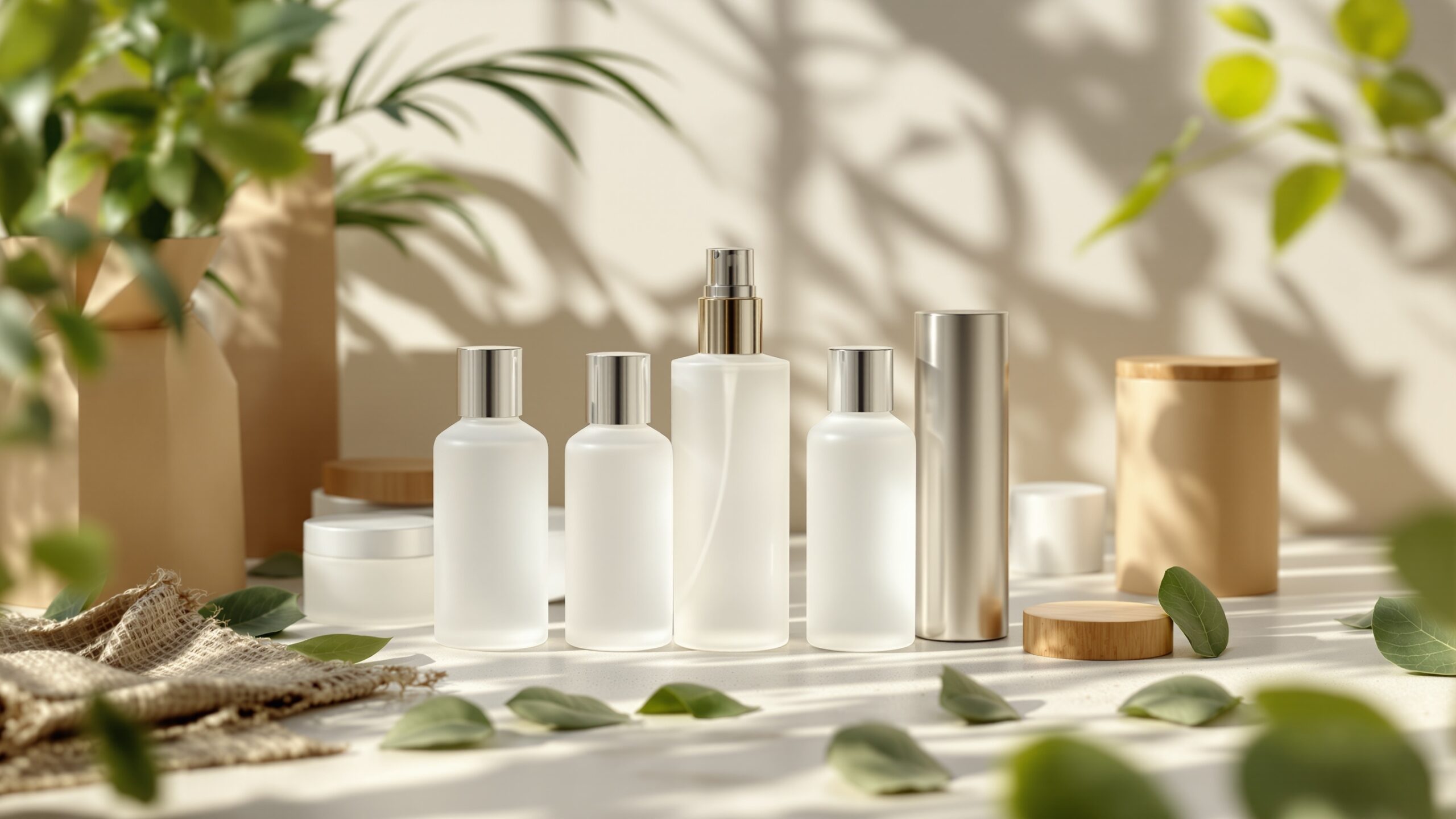
Glass is popular because it feels premium, recyclable, and less plasticky. It also protects certain formulas well and looks beautiful in skincare photography. The tradeoff is weight, breakability, shipping energy, and the reality that recycling access varies by location.
Green packaging is rarely perfect. A thoughtful brand explains why it chose glass for a specific product rather than presenting glass as a universal solution.
Glass photographs beautifully and feels aligned with clean beauty, but it is not automatically the lowest-impact choice. It can be heavy to ship, fragile in bathrooms, and dependent on local recycling systems. A brand using glass still needs to explain the tradeoff.
That does not mean glass is bad. It means the material should match the formula and distribution model. A small facial oil may make sense in glass. A shower product shipped across the country may require a more practical calculation.
There is also the bathroom problem. Glass looks beautiful until it slips from wet hands or sits on a tile ledge in the shower. Packaging has to be judged in the room where it will actually live, not only in a studio photo.
Shipping is part of the equation too. A heavy glass jar may increase transport emissions, especially when it is packaged with extra padding to prevent breakage. For a local refill program, the tradeoff may look different than it does for a brand shipping small orders nationwide.
Glass is most persuasive when the customer can reuse it, recycle it locally, or buy refills that make the original container worthwhile. Without that system, glass can become an aesthetic choice more than a sustainability solution.
Aluminum and Paperboard Are Growing
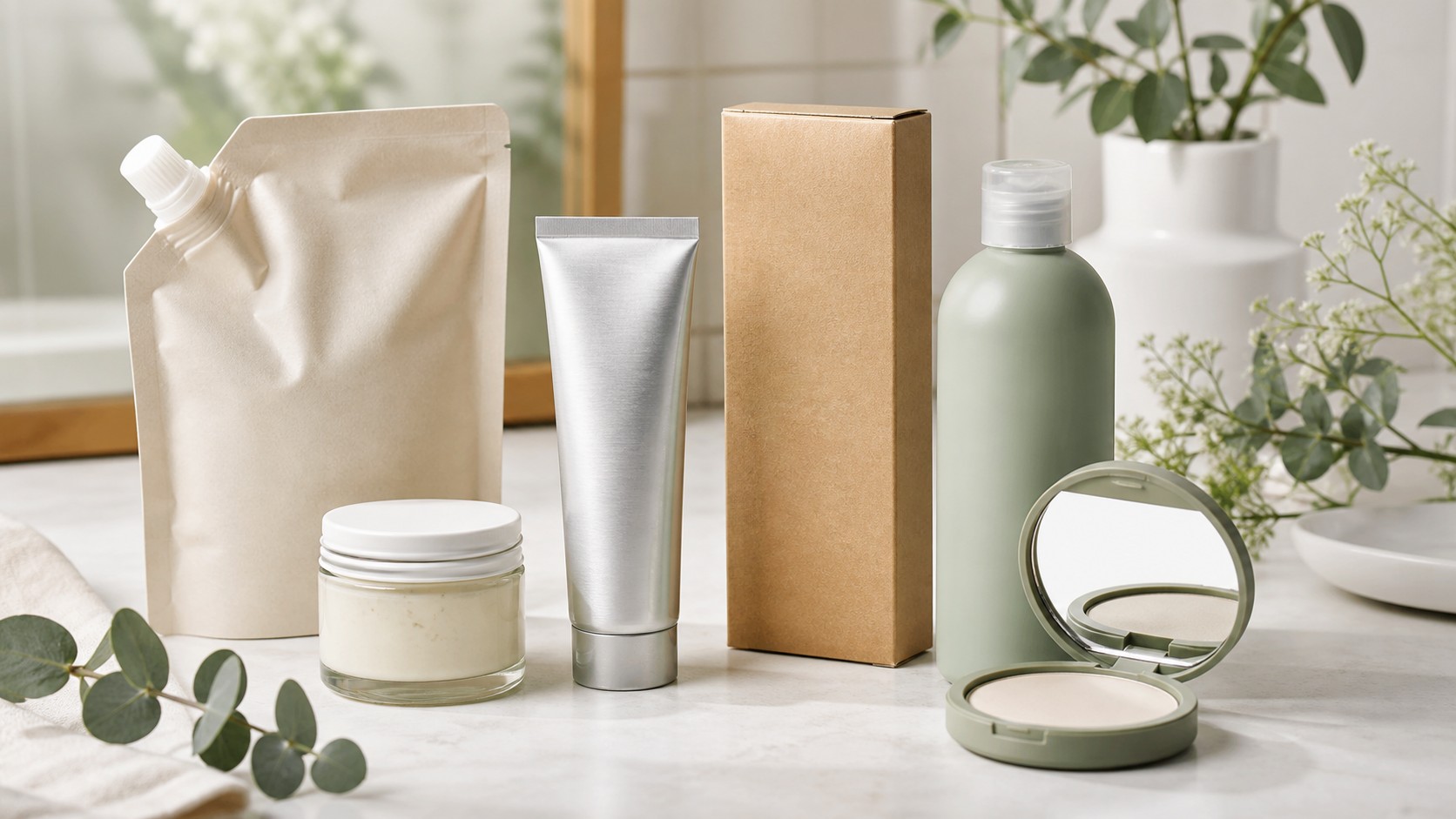
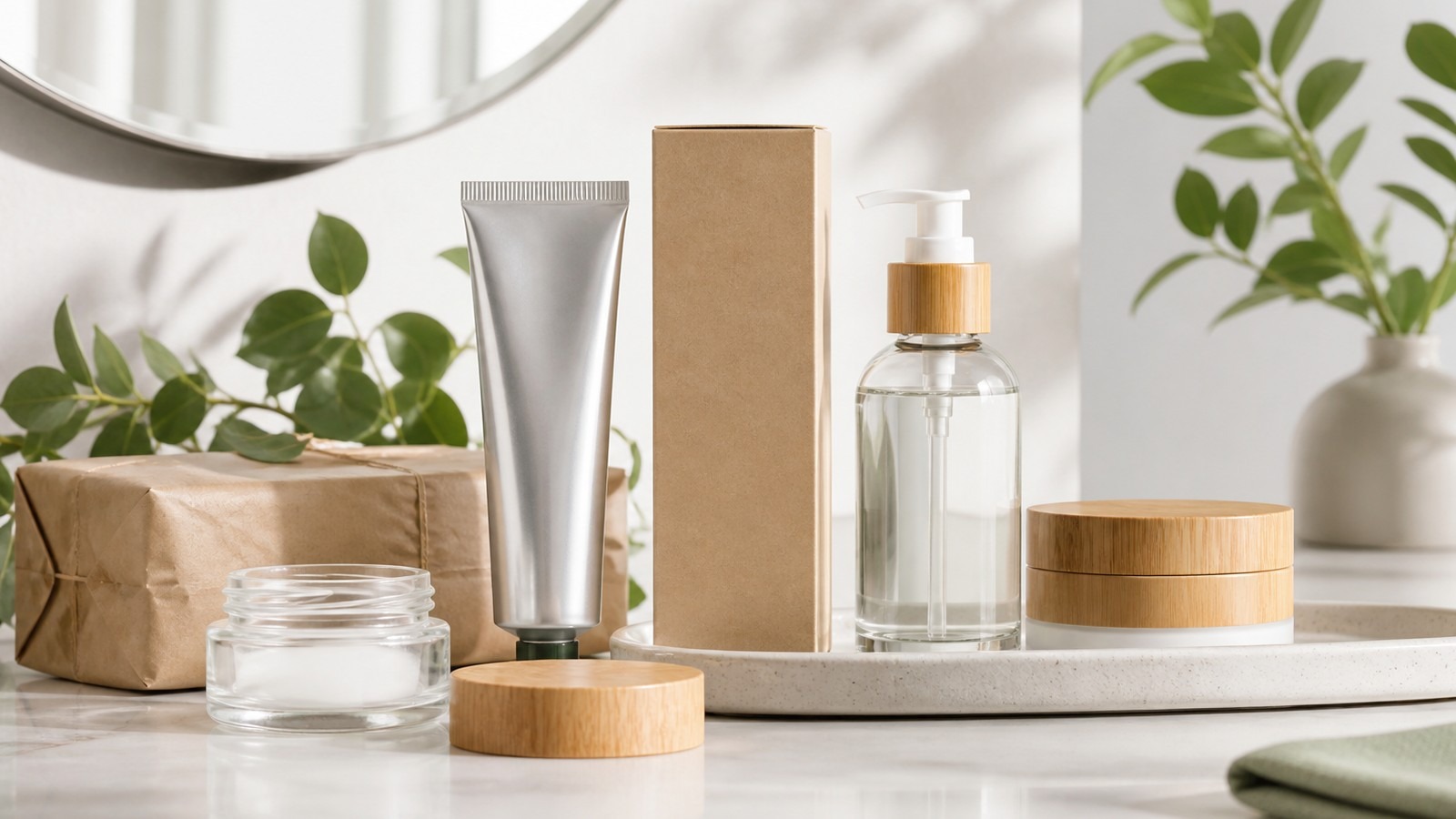
Aluminum tubes, metal tins, and paperboard cartons are appearing more often in clean beauty because they can reduce reliance on traditional plastic. They also communicate a modern, lower-waste sensibility without making the product look unfinished.
These materials still need good design. A paper carton with a plastic insert may not be as green as it looks, and a metal tube that cracks or leaks will frustrate customers. Function has to support the sustainability story.
Aluminum tubes and paperboard formats are gaining attention because they move beauty away from default plastic. They also give brands a modern visual language: sleek, tactile, less disposable. The challenge is making these materials function well enough for daily use.
A paperboard package that collapses in a humid bathroom or an aluminum tube that cracks before the product is finished creates waste of another kind. Green packaging has to survive real life.
The best examples feel intentional rather than performative. A sturdy aluminum tube for hand cream, a paperboard deodorant that advances cleanly, or a carton that replaces plastic without adding confusion can make sustainability feel practical instead of symbolic in daily use at home too often.
Plastic Reduction Is Not Always Simple
Plastic is lightweight, durable, and useful for many formulas, which is why beauty brands have relied on it for so long. Reducing plastic is important, but replacing it poorly can create new problems with breakage, contamination, shipping weight, or product waste.
The more honest goal is better packaging, not plastic-free perfection. Recycled content, mono-material components, larger refill sizes, and fewer decorative extras can all improve the footprint.
Plastic is overused, but it became common for reasons: it is light, durable, inexpensive, and compatible with many formulas. Replacing it responsibly means understanding those functions rather than simply swapping in a heavier or more fragile material for optics.
Better plastic strategy may include recycled content, fewer mixed materials, larger refill sizes, pumps that can be reused, or components that are easier to separate. The most sustainable answer may be less glamorous than a dramatic plastic-free claim.
Some of the most meaningful improvements are quiet. A brand may reduce the weight of a cap, remove an unnecessary spatula, make components easier to separate, or stop shipping tiny products in large cartons. Those changes do not always photograph dramatically, but they can reduce waste at scale.
This is why shoppers should look for specifics instead of vibes. A smaller package, refill option, or mono-material component tells you more than a broad earth-friendly claim.
Labels and Claims Need Clarity
Packaging claims can be confusing because recyclable, recycled, biodegradable, compostable, refillable, and reusable all mean different things. A shopper should not need a sustainability degree to understand what to do with an empty bottle.
Good green packaging gives clear instructions without overpromising. If a component is recyclable only in limited programs, the brand should say so. If a refill reduces waste after several uses, the brand should explain that honestly.
Green claims are useful only when the shopper knows what action to take. Recyclable where? Compostable under what conditions? Refillable with which product? Made from recycled content by what percentage? Vague claims shift the burden onto the customer.
Clear instructions are a form of respect. If a cap must be removed, a pump cannot be recycled curbside, or a carton belongs in paper recycling only after separating an insert, the brand should say so plainly.
The clarity problem becomes obvious after the product is empty. If the customer stands over the trash wondering whether to separate the pump, rinse the jar, remove the label, or mail back the component, the packaging design has not finished its job.
A brand that gives disposal instructions is doing more than adding fine print. It is acknowledging that the customer’s job begins when the product is empty. That final moment is where many green claims either become useful or fall apart.
Clear claims also prevent guilt. Shoppers should not have to wonder whether they failed the planet because a pump, cap, liner, or mixed-material carton was confusing. Better packaging design reduces that confusion from the beginning.
Design Still Matters
Beauty packaging has to protect the formula, dispense the product cleanly, survive a bathroom, and feel good to use. Sustainable packaging that breaks, leaks, or exposes the product to air can create waste by ruining the formula before it is finished.
The best green packaging blends responsibility with pleasure. It feels elevated enough to keep, practical enough to use daily, and clear enough to dispose of responsibly.
Sustainable packaging cannot feel like punishment. Beauty is sensory: the cap, pump, jar weight, closure, and dispensing all affect whether the product is used consistently. If the package leaks, clogs, or makes the formula hard to finish, sustainability suffers.
The best green packaging feels elegant and practical at the same time. It protects the formula, reduces unnecessary waste, and makes the customer want to keep using it.
Gloss Street’s Take
Green packaging is becoming part of clean beauty because shoppers are asking better questions. What is the jar made of? Can it be refilled? Is the carton necessary? What happens when the product is empty? Those questions are changing how brands design the entire product experience.
The future is not one perfect material. It is smarter packaging choices matched to the formula, the supply chain, and the customer’s real behavior.
Gloss Street’s view is that the future is not one perfect material. It is better matching: glass where glass makes sense, aluminum where it performs, refills where customers will actually refill, and plastic reduction where durability can be preserved.
Green packaging is rising because shoppers are asking better questions. The strongest brands will answer with specifics instead of soft-focus eco language.
The future will likely be mixed rather than pure. Some formulas will stay in plastic because safety and durability require it. Some will move to aluminum, glass, paperboard, or refills. The real progress is choosing intentionally and explaining honestly.
Green packaging should make the beauty routine feel less wasteful without making it harder to enjoy the product. That balance is where clean beauty packaging is finally growing up.