Flawless Foundation Is Built in Thin Decisions, Not One Perfect Layer
Foundation looks flawless when it behaves like skin that has been evened out, not like a single coat sitting on top of the face. The difference comes from preparation, formula choice, placement, pressure, and knowing when enough coverage is enough. A polished base does not require hiding every freckle, pore, shadow, or texture change. It requires making the complexion look balanced while still letting the face move. When you build foundation in thin decisions, you can fix redness, soften uneven tone, and keep the finish believable in daylight.
A: Only use primer when it solves a problem that moisturizer and foundation do not handle alone.
A: A brush gives more polish and coverage, while a sponge softens and sheers the finish.
A: Cakiness usually comes from too much product, dry texture, or powder placed too heavily.
A: Use compatible skincare, let layers settle, and blot oil before touching up.
A: Foundation should even the skin, while concealer should handle precise blemish coverage.
A: Look at whether the shade turns pink, yellow, peach, gray, or olive against your face and neck.
A: Powder only where foundation moves, transfers, or becomes oily.
A: No, setting spray can mesh layers, but powder controls movement and shine more directly.
A: Oxidation, oil, sunscreen, and dry-down can all shift how foundation looks.
A: Use thin layers where needed and stop once the complexion looks balanced.
Prep Should Match the Foundation, Not Fight It
Skin prep is not a universal checklist. A matte foundation over a greasy moisturizer can slide. A radiant foundation over dry flakes can cling. A silicone-heavy primer under a water-light base can pill if the layers are not compatible. The best prep is the simplest combination that makes your skin comfortable and lets the foundation spread evenly.
Start with clean skin and a moisturizer that suits your current texture. Dry areas may need more cream, while oily areas may need less. Give skincare time to settle before foundation. If the face feels tacky, shiny, or slippery, press lightly with a tissue before applying makeup. Foundation should meet skin that is hydrated but not overloaded.
Primer is optional. Use it when it solves a specific problem, such as oil breakthrough, visible texture, or makeup breakdown around the nose. Skip it when it adds another layer without improving wear. Flawless foundation often comes from fewer layers that cooperate, not more layers that compete.
One practical method is to prep in zones. Use a little more moisturizer where foundation usually catches, and use less through the center of the face if oil breaks down makeup there. This keeps the skin balanced without making every area behave as if it had the same needs. A zoned prep step can make one foundation look more customized.
Shade Match in the Places People Actually See
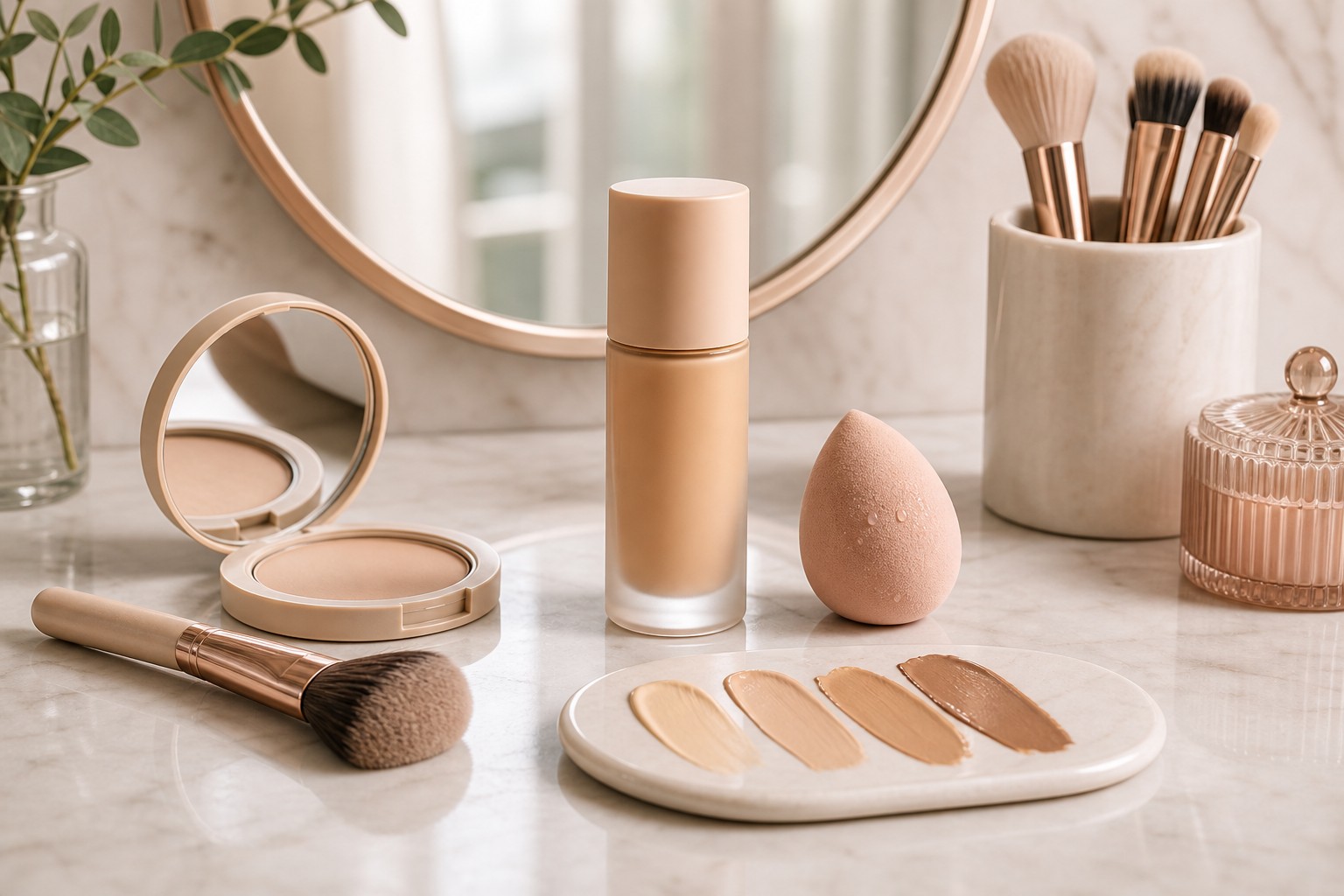
Foundation should be matched to the face, neck, and chest relationship rather than a random stripe on the wrist. The wrist often has a different undertone and depth from the face. Test along the jaw or lower cheek, then look in natural light. The right shade should disappear without needing to be dragged down the neck in a heavy layer.
Undertone matters as much as depth. A foundation can be the right lightness but still look pink, yellow, gray, peach, or olive in the wrong way. If a shade looks obvious after blending, the undertone may be off. A slightly sheer formula gives more forgiveness, while full coverage makes undertone errors louder.
Seasonal changes are normal. Many people need a slightly different shade or a mixing strategy through the year. That does not mean foundation is failing. It means skin tone changes with sun exposure, self-tanner, and overall color. A flawless routine allows small adjustments.
Place Coverage Where the Face Needs It Most
Applying foundation everywhere with the same amount can make the face look flat. Most people need more coverage around redness, uneven tone, the nose, chin, or cheeks, and less coverage on the perimeter, forehead, or areas where skin already looks even. Begin in the center of the face and blend outward. This keeps coverage where it matters while letting the edges stay natural.
Use a thin first layer. A sheer pass lets you see what is actually still visible. Then spot-build only where needed. This approach prevents the common problem of using full coverage across the whole face when only a few areas needed more help. Skin looks smoother when coverage is concentrated instead of blanket-thick.
Do not chase every pore. Foundation is not designed to erase skin structure, and trying to do so often creates a heavier texture. A flawless base is usually one that looks even from conversation distance. If the base looks good in normal light and movement, magnifying-mirror perfection is not the standard.
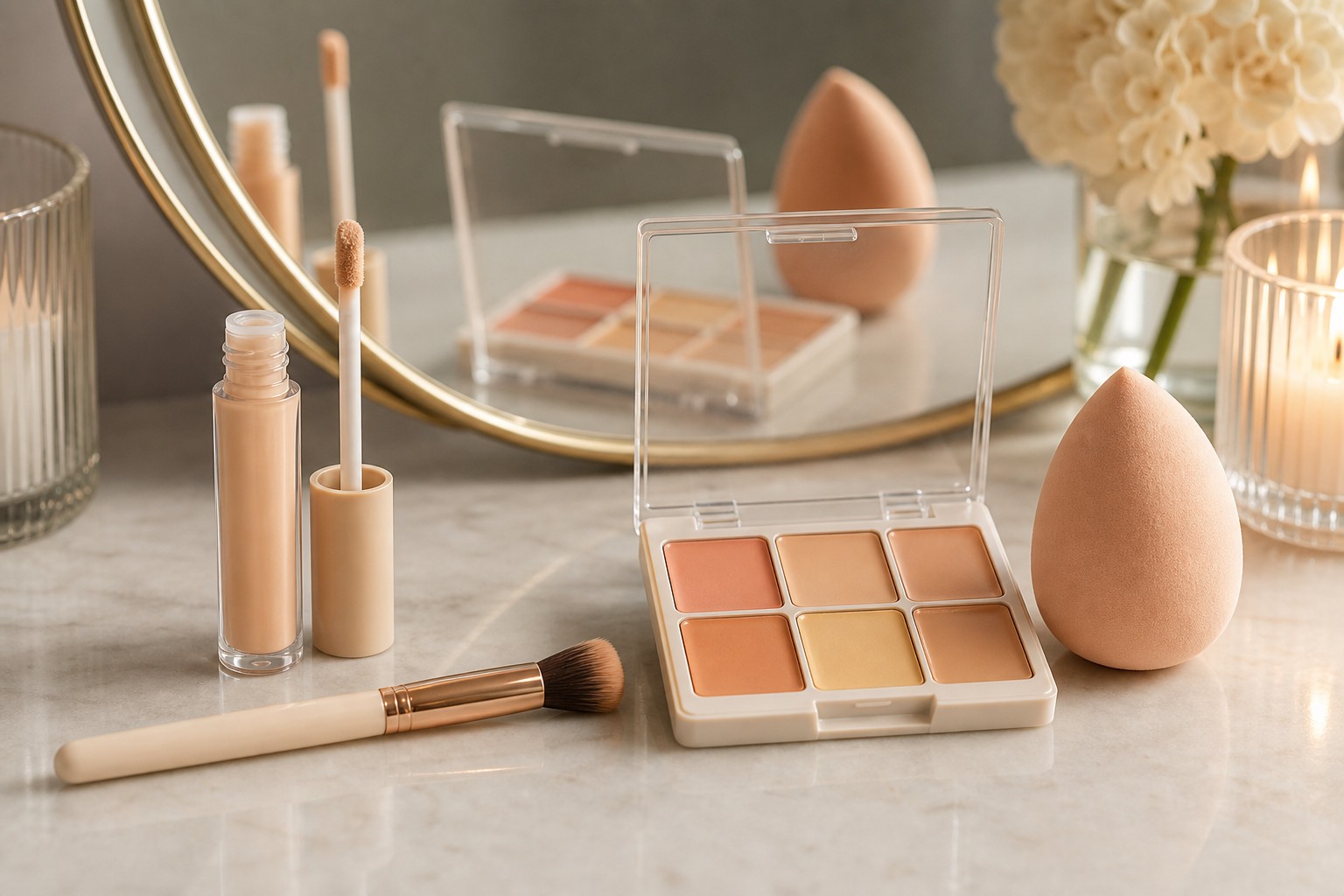
For redness, press foundation into the red area and soften the edges. For discoloration, use thin layers rather than one thick patch. For blemishes, foundation can even the surrounding skin, but concealer should do the tiny targeted work. Dividing the jobs keeps the base lighter.
Think of foundation as complexion editing rather than concealment. You are deciding which areas need evening and which areas can remain sheer. This mindset keeps the face from becoming one flat color. It also makes blush, bronzer, and concealer blend more naturally afterward.
Choose the Tool for the Finish You Want
Brushes, sponges, and fingers create different finishes. A dense brush can give more coverage and polish quickly. A damp sponge can sheer out product and soften edges. Fingers can warm certain creams and skin tints so they melt more naturally. None is automatically best; the tool should match the formula and finish.
Pressure matters more than people think. Pressing or stippling keeps coverage in place, while dragging can create streaks and lift skincare underneath. If foundation is streaky, try using less product and shorter motions. If it looks too heavy, bounce a damp sponge over the surface to remove excess.
Clean tools are part of flawless application. Old foundation buildup can make brushes streak, sponges patchy, and skin more breakout-prone. Wash tools regularly and let them dry fully. A perfect shade will not look perfect when applied with a tool coated in last week’s product.
Tool switching can solve problems without adding product. Use a brush for the first polished placement, then press a sponge over the cheeks and around the mouth where makeup can look thick. The sponge is not starting the application; it is refining it. That order gives coverage and softness in the same routine.
Build Coverage Slowly and Stop Earlier
The most common foundation mistake is adding coverage after the face already looks balanced. Step back from the mirror after the first layer. Look at the whole face, not one pore or one mark. If the complexion reads even, stop and use concealer only where something still needs precision. This keeps foundation from becoming a mask.
Waiting a minute can also help. Some foundations settle, warm up, or change slightly as they meet skin. If you apply more too quickly, the final result may become thicker than expected. Let the first layer set enough to judge the finish before building.
When building, use smaller amounts than the first pass. Add half a pump or a dot at a time. Press into the specific zone and blend the edge into the surrounding skin. The goal is continuity, not a visible second layer.
Flawless foundation often has tiny imperfections left intentionally. A hint of freckle, natural cheek tone, or skin texture keeps the result believable. The face should look refined, not erased.
A useful stopping point is when redness no longer distracts you at arm’s length. The face does not need to become blank before foundation is finished. If you keep building until every tiny mark disappears, texture often becomes the new distraction. Flawless makeup is a balance between tone and surface.
Set Strategically Instead of Powdering Everything
Setting depends on skin type, formula, and day. Oily areas may need powder through the center of the face, while dry cheeks may look better left unset. A soft powder puff can press powder where foundation moves, and a fluffy brush can whisper powder over larger areas. The wrong powder placement can turn a beautiful base dry and flat.
Before powder, smooth any lines around the mouth, nose, or under the eyes. Powder locks in what is there. If foundation has already gathered, tap it out first. Use less powder near texture and more where shine breaks makeup apart.
Setting spray can help mesh layers, but it is not a cure for too much product. A mist can soften powder and make the surface look more skin-like. It cannot make a mismatched foundation shade disappear or fix a base that was applied over incompatible skincare.
Make Foundation Wear Through Real Life
A flawless application at 8 a.m. is only half the story. Foundation has to survive facial movement, oil, masks, phones, weather, meals, and touch. Choose formulas for the day you are having. A long-wear matte base may suit an event or humid commute, while a flexible skin tint may look better on a dry office day.
Touch-ups should be small. Blot oil before adding powder. Tap a tiny amount of foundation or concealer only where coverage has worn away. Adding layers over oil, sweat, or separated makeup can create texture. A good touch-up restores the surface without rebuilding the whole face.
Pay attention to breakdown patterns. If foundation always disappears around the nose, prep and powder may need adjusting there. If it cracks on the cheeks, the formula may be too matte or the skin too dry. If it slides everywhere, the skincare underneath may be too rich. Patterns make the fix easier.
Consider what will touch your face. Scarves, phone screens, sunglasses, hands, and masks can remove foundation in predictable places. Set or thin those areas differently instead of treating the entire face the same. Real-life friction is part of base makeup, not a surprise failure.
Troubleshoot Without Starting Over
Streaks usually mean too much product, the wrong tool, or not enough blending at the edges. Patchiness can come from dry skin, incompatible skincare, or foundation setting too quickly before it is spread. Cakiness often comes from building full coverage over the whole face instead of spot-building. Oxidation can mean the formula changes color with skin chemistry or oils.
When foundation looks heavy, use a damp sponge to lift excess and press the surface together. When it looks dry, mist lightly and tap moisturizer on the driest edges if the formula allows it. When it looks too shiny, blot before powdering. Small corrections are usually better than washing off everything.
Keep notes on what worked. Foundation is affected by moisturizer, sunscreen, primer, tool, powder, humidity, and skin condition. A flawless routine becomes repeatable when you know the combination, not just the bottle name.
If the base looks wrong, diagnose the surface before blaming the product. Is it the shade, the texture, the shine, the powder, or the layer underneath? Fixing the exact issue keeps you from buying another bottle that behaves the same way. Foundation skill grows when you name the problem precisely.
Keep one reliable base combination for important days. Testing a new sunscreen, primer, brush, powder, and foundation together creates too many variables. A dependable routine may feel less exciting, but it is what makes flawless application repeatable. Save experiments for low-pressure days.
Gloss Street’s Take
Flawless foundation is not a thick layer. It is a sequence of compatible prep, accurate shade, targeted placement, patient blending, and strategic setting. The finish should make your complexion look more even while still looking like a face that belongs to you.
The real skill is stopping at balanced. Once the face looks even from normal distance, let concealer handle the small details and let skin remain skin. That restraint is what makes foundation look expensive, even when the product is simple.
The best foundation routine should feel calm. You prep what needs prep, cover what needs coverage, and leave the rest alone. That is how the base looks polished without announcing every step used to create it. Flawless is often quieter than full coverage.