
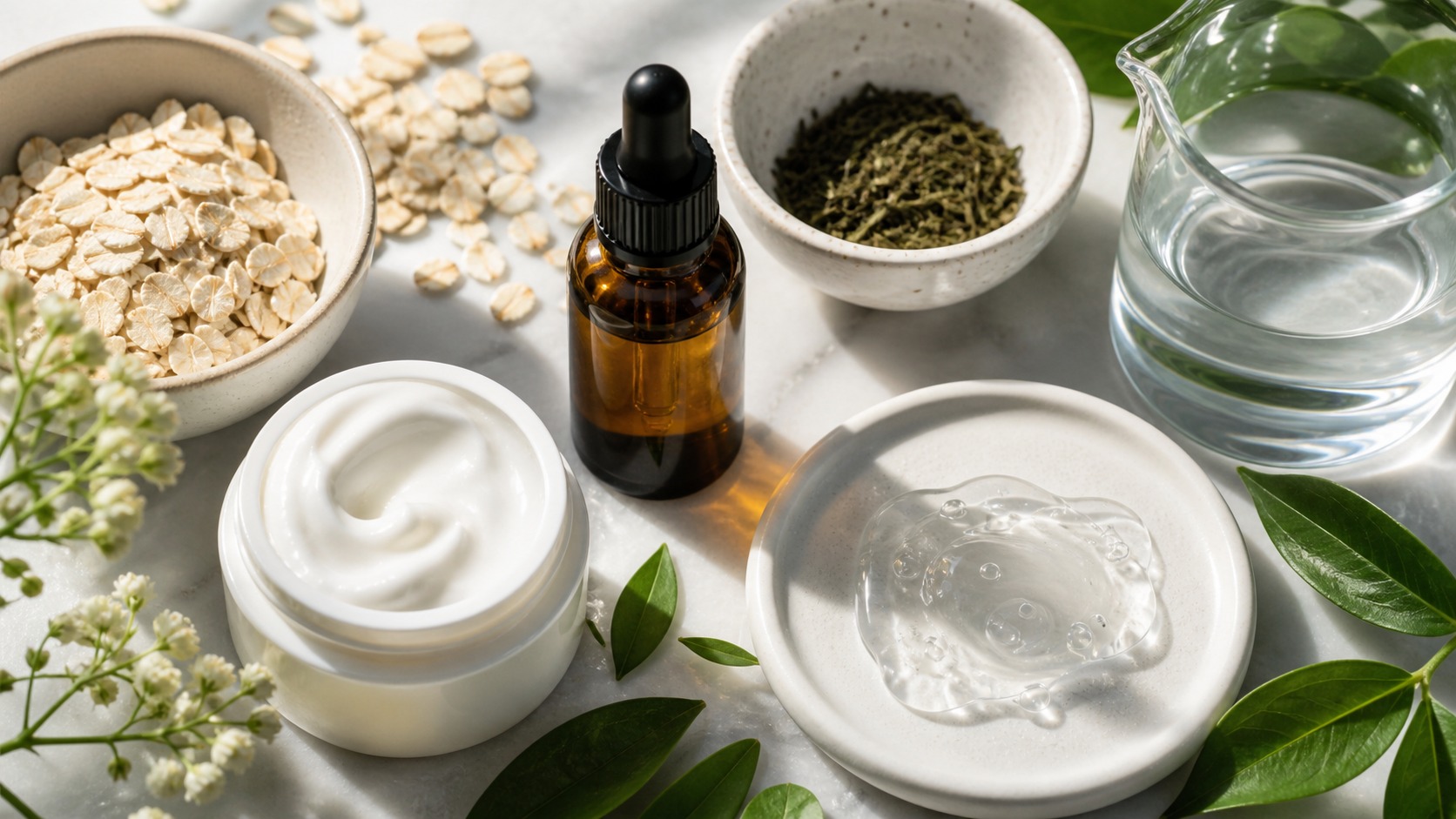
The Best Clean Ingredients Are Useful, Not Just Pretty
Clean skincare ingredients often get discussed like a mood board: aloe, oat, green tea, rosehip, squalane, chamomile, minerals, and glass bottles in good light. A beautiful ingredient story can be appealing, but skin needs function. The ingredients worth looking for are the ones that hydrate, support the barrier, calm visible irritation, protect from UV exposure, smooth roughness, or help tone look more even. Some are plant-derived, some are lab-made, and many are both safe and effective when formulated well. The smarter clean skincare shopper does not chase every botanical. They look for ingredients with a clear job and a formula that lets them do it.
A: There is no single best; glycerin, ceramides, niacinamide, and sunscreen filters are strong starting points.
A: No. Plants can soothe, irritate, or trigger allergies depending on the person and formula.
A: No. Preservatives help keep water-based products safe.
A: Often yes, especially in lightweight formulas.
A: Not always, but it can help dehydration when sealed properly.
A: Many clean shoppers prefer them, but the best sunscreen is the one you use correctly.
A: Yes, if they are gentle, purposeful, and tolerated.
A: Ceramides, glycerin, squalane, oat, and bland moisturizers can help.
A: Start with your skin goal, then choose ingredients with that job.
A: Formula. An ingredient only works as well as the product built around it.
Glycerin Is the Quiet Hydration Hero
Glycerin is one of the most dependable ingredients in skincare. It is a humectant, which means it helps draw water into the outer layer of skin. In clean skincare, it may not sound as glamorous as a rare botanical oil, but it often does more for comfort. It works in cleansers, serums, moisturizers, and hand creams.
Look for glycerin when your skin feels tight, dehydrated, or easily irritated. It performs best when paired with ingredients that slow water loss, such as emollients and occlusives. Hydration needs both water attraction and water retention.
Ceramides Support the Barrier
Ceramides are lipids naturally found in the skin barrier. In skincare, they help reinforce the feeling of a stronger, more comfortable barrier, especially in moisturizers. Clean routines sometimes over-focus on what to avoid and under-focus on what the skin needs. Ceramides are a useful reminder that barrier support is positive care.
They are especially helpful for dry, sensitive, over-exfoliated, or mature skin. A clean moisturizer with ceramides does not need to be dramatic. It needs to be used consistently.
Niacinamide Is Versatile When Used Well
Niacinamide can support barrier function, help uneven tone look calmer, reduce the look of redness for some users, and balance oiliness. It fits many clean-leaning routines because it is multi-purpose and generally well tolerated at reasonable levels. More is not always better, though. High percentages can bother some skin.
Look for niacinamide in moisturizers or serums when you want one ingredient that covers several everyday concerns. If your skin stings from it, try a lower-strength product or a formula where niacinamide is not the headline percentage.
Squalane Gives Lightweight Softness
Squalane is an emollient that helps skin feel smooth without the heaviness of many oils. It can be plant-derived and is popular in clean skincare because it is simple, elegant, and friendly to many skin types. Dry skin may use it under or over moisturizer. Oily skin may prefer it in a lightweight cream rather than as a separate oil.
Its job is not to exfoliate, brighten, or transform overnight. Its job is softness and barrier comfort. That quiet role is exactly why it earns a place.
Colloidal Oat and Aloe Can Calm the Feel of Skin
Colloidal oatmeal has a long history in soothing dry, itchy-feeling skin. Aloe can feel cooling and hydrating when formulated well. Both ingredients are common in clean skincare, but they are not automatically perfect for everyone. The full formula still matters, especially if fragrance or essential oils are added around them.
Look for oat in creams, masks, and body products when the skin feels stressed. Look for aloe in lightweight hydrators when you want a fresh feel. Avoid assuming that a single soothing ingredient can rescue an otherwise irritating product.
Green Tea and Antioxidants Add Support
Green tea, vitamin E, and other antioxidants can help support skin exposed to environmental stress. They are not replacements for sunscreen, but they can be useful companions in a daytime routine. Clean skincare often loves antioxidant stories, and some of those stories have real value when the formula is stable and the ingredient level is meaningful.
Do not judge antioxidant products only by color or plant name. Packaging, stability, and the rest of the formula matter. A delicate antioxidant in a clear jar may not perform as well as the marketing suggests.
Mineral Sunscreen Filters Matter
Zinc oxide and titanium dioxide are mineral UV filters often favored in clean skincare. They sit well with many clean beauty standards and can be helpful for sensitive skin. They also have tradeoffs: white cast, thickness, and pilling can be issues. Modern formulas are much better than older chalky versions, but texture still matters.
Mineral sunscreen is worth looking for if it suits your skin and tone. If it makes you avoid sunscreen altogether, keep searching. Protection is the point.
Gentle Acids Can Fit Clean Skincare
Lactic acid, mandelic acid, and polyhydroxy acids can smooth texture and help dull skin look brighter when used carefully. Clean skincare does not have to avoid exfoliation, but it should avoid turning exfoliation into daily punishment. Sensitive skin may need very low frequency or none at all.
Look for gentle acids when rough texture, clogged pores, or dullness are real concerns. Do not add them because every routine needs an exfoliant. Many do not.
Preservatives Are Ingredients to Appreciate
Preservatives rarely appear on clean ingredient wish lists, but they matter. Any water-based product needs a preservation system to reduce microbial growth. A clean formula that ignores preservation is not more virtuous; it may be less safe. The best brands explain how they keep formulas stable and safe.
This is part of ingredient literacy. Looking for good ingredients also means respecting the less glamorous ingredients that make products usable.
Choose Ingredients by Skin Goal
For dehydration, look for glycerin, hyaluronic acid, aloe, and panthenol. For barrier support, look for ceramides, squalane, fatty acids, and oat. For tone, look for niacinamide, vitamin C derivatives, licorice, or azelaic acid if tolerated. For protection, look for broad-spectrum sunscreen filters. For texture, consider gentle acids.
Gloss Street’s clean ingredient rule is simple: every ingredient should have a reason to be there. A clean routine becomes stronger when you stop collecting pretty names and start choosing functions your skin actually needs.
Formulation Beats Ingredient Worship
No ingredient works in isolation once it is inside a real product. Texture, pH, packaging, concentration, preservation, and companion ingredients all influence performance. That is why two products with the same hero ingredient can feel completely different. Clean skincare shopping gets easier when you judge the formula, not just the front label.
Look for ingredients, but do not worship them. Skin responds to finished products.
Panthenol Deserves More Attention
Panthenol, also known as provitamin B5, is a useful comfort ingredient in clean-leaning formulas. It supports hydration, helps the skin feel more flexible, and often appears in barrier-focused products. It is not flashy, which is exactly why it can be overlooked. In a routine full of trend ingredients, panthenol quietly makes products feel kinder.
Look for it in moisturizers, serums, after-sun products, and hand creams. It pairs well with glycerin, ceramides, squalane, and soothing ingredients. For sensitive skin, those supportive combinations often matter more than dramatic actives.
Azelaic Acid Can Bridge Clean and Clinical
Azelaic acid is a helpful example of an ingredient that may not sound botanical but can fit a thoughtful clean routine. It can support the look of clearer pores, calmer redness, and more even tone for many people. It is especially interesting for shoppers who want an evidence-aware treatment that is not simply another fragrant plant extract.
Like any active, it needs tolerance. Start slowly and use sunscreen. If the skin stings or dries out, reduce frequency or choose a gentler formula. Clean skincare does not mean avoiding results; it means using results-driven ingredients responsibly.
Licorice and Centella Need Formula Context
Licorice extract and centella are popular in calming and tone-support formulas. They can be useful, but they are not magic words. The extract quality, concentration, companion ingredients, and overall formula determine whether they contribute meaningfully. A product can advertise a soothing plant and still irritate if it is loaded with fragrance.
This is why ingredient lists should be read as a whole. A good clean formula uses supportive ingredients in a base that makes sense. A weak one leans on a recognizable botanical while ignoring the rest of the skin experience.
Do Not Forget Boring Base Ingredients
Some of the best skincare ingredients sound boring: fatty alcohols, emulsifiers, preservatives, silicones, and stabilizers. They help a cream feel smooth, keep oil and water blended, reduce water loss, and prevent contamination. Clean beauty sometimes treats these background ingredients as less desirable than hero botanicals, but finished products depend on them.
Learning to appreciate base ingredients makes you a better shopper. It helps you understand why one moisturizer feels elegant and another separates, pills, or spoils quickly. Clean skincare is not only about what sounds natural. It is about what makes the product safe, stable, and pleasant enough to use.
Match Ingredients to Product Type
An ingredient’s value depends partly on where it appears. Glycerin in a cleanser can reduce a stripped feeling, but glycerin in a leave-on moisturizer has more time to hydrate. Antioxidants in daytime serums can make sense under sunscreen, while rich occlusives may be better at night. Gentle acids belong in products used at controlled frequency, not hidden in every step until the skin becomes over-exfoliated.
Think about contact time. Rinse-off products do not deliver ingredients the same way leave-on products do. A cleanser with green tea may be pleasant, but a leave-on serum has more opportunity to provide antioxidant support. A body wash with ceramides may feel nice, but a body cream will usually do more for barrier comfort.
This does not mean rinse-off ingredients are useless. It means expectations should match the format. Clean skincare shopping becomes much easier when you ask not only “Is this ingredient good?” but “Is this the right product type for that ingredient to matter?”
Ingredient Lists Should Become Less Intimidating
The point of learning ingredients is not to turn every shopping trip into homework. It is to make labels less intimidating over time. Once you recognize hydration helpers, barrier builders, soothing agents, sunscreen filters, and treatment actives, you can scan a product more calmly. You start to see whether the formula matches its promise.
Do not expect to know every ingredient. Even professionals look things up. Focus on patterns: fragrance in a sensitive-skin cream, strong acids in multiple routine steps, good humectants without anything to seal them, or a hero botanical surrounded by irritants. Pattern recognition is more useful than memorizing a thousand names.
When in doubt, return to the skin goal. Dryness asks for humectants and barrier support. Redness asks for fewer triggers and calming ingredients. Dull texture asks for gentle renewal, not a dozen acids. Sun concerns ask for sunscreen first. The best ingredient is the one that solves the problem you actually have.
This approach also protects your budget. Instead of buying every product with a popular plant extract, you can choose the ingredient category your skin needs most. A useful formula earns its place by function first and story second.
That is how ingredient literacy becomes calming instead of overwhelming. You are not trying to become a cosmetic chemist before buying moisturizer; you are learning enough to spot the difference between a useful formula and a pretty ingredient story.


