A Clean Skincare Routine Starts With Fewer Decisions
Building a clean skincare routine from scratch is easier when you stop trying to buy an entire shelf at once. The strongest beginner routine is not a ten-step ritual with every trending botanical. It is a clear structure: cleanse without stripping, moisturize to support the barrier, protect with sunscreen, and add targeted treatments only when your skin has proven it can handle the basics. Clean skincare should make the routine easier to understand, not more stressful. When you choose products for purpose, tolerance, transparency, and real performance, the routine starts to feel less like a shopping category and more like a practical system for taking care of your skin.
A: Start with cleanser, moisturizer, and sunscreen.
A: Yes, but acne may still need proven actives and sometimes medical care.
A: No. Choose the sunscreen you tolerate and use correctly.
A: If your skin is reactive, fragrance-free is a smart starting point.
A: After the basics work consistently.
A: Give it several uses unless irritation appears quickly.
A: Yes. Your skin does not care about category purity.
A: Simplify layers and test texture compatibility.
A: Not unless it serves a clear purpose for your skin.
A: Add slowly enough that your skin can answer.
Define What Clean Means to You
Clean skincare is not a single universal rule. Some people use it to mean fragrance-free and low-irritant. Others care most about cruelty-free, vegan, refillable packaging, or avoiding certain ingredient categories. Before buying products, decide which standards matter most to you. Otherwise every brand will define clean for you.
Your definition should still leave room for skin science. A product can be clean by your values and still need preservatives, emulsifiers, and stabilizers. The goal is not purity for its own sake. The goal is a routine that is transparent, tolerable, and effective.
Start With a Gentle Cleanser
A clean routine begins with cleansing that does not leave the skin tight. Look for a formula that removes sunscreen, sweat, and daily debris without making the face feel squeaky. Gel, cream, milk, or balm textures can all work depending on skin type. The cleanser does not need to be dramatic because it is rinsed away.
If your skin is dry or sensitive, avoid strong fragrance, harsh scrubs, and aggressive foaming. If you wear heavy makeup or water-resistant sunscreen, you may need a first cleanse followed by a gentle second cleanse. Clean does not mean under-cleansed; it means appropriate.
Choose Moisturizer by Barrier Need
Moisturizer is the comfort center of the routine. Dry skin may need a richer cream with occlusives and emollients. Oily skin may prefer a lighter gel-cream. Sensitive skin often does well with fragrance-free formulas that include glycerin, ceramides, squalane, panthenol, or colloidal oatmeal. A good moisturizer should leave the skin more comfortable hours later, not just shiny for ten minutes.
Do not skip moisturizer because the routine is clean or minimal. Barrier support is what helps skin tolerate sunscreen and treatments later.
Sunscreen Is Non-Negotiable
A clean routine without sunscreen is unfinished. UV exposure contributes to dark spots, premature aging, uneven tone, and worsening marks after inflammation. Choose a broad-spectrum sunscreen you can apply generously. Mineral formulas appeal to many clean beauty shoppers, but chemical filters can also be effective and elegant. The best choice is the one you tolerate and use.
If white cast, eye sting, or pilling makes you avoid sunscreen, keep testing textures. Sunscreen adherence matters more than winning an ingredient philosophy debate.
Add Actives Only After the Basics Work
Once cleanser, moisturizer, and sunscreen are steady, choose one treatment based on your main goal. Acne, dark spots, redness, texture, and fine lines do not all need the same ingredient. Niacinamide, azelaic acid, vitamin C, retinoids, gentle exfoliating acids, and peptides can all fit into a clean-leaning routine depending on your standards and tolerance.
Introduce one active at a time. Use it slowly. Watch the skin for dryness, burning, bumps, or redness. A routine becomes messy when five new products arrive before the skin can give feedback.
Patch Test Without Turning It Into Theater
Patch testing is simple: try a small amount of a new product on a limited area and watch for trouble before applying it everywhere. It is especially useful for leave-on products, fragranced formulas, exfoliants, and botanical-heavy products. It does not guarantee perfect tolerance, but it can catch obvious issues.
Do not patch test five products at once. If irritation appears, you will not know which product caused it. Clean skincare works better when the testing process is slow enough to teach you something.
Avoid Buying by Aesthetic Alone
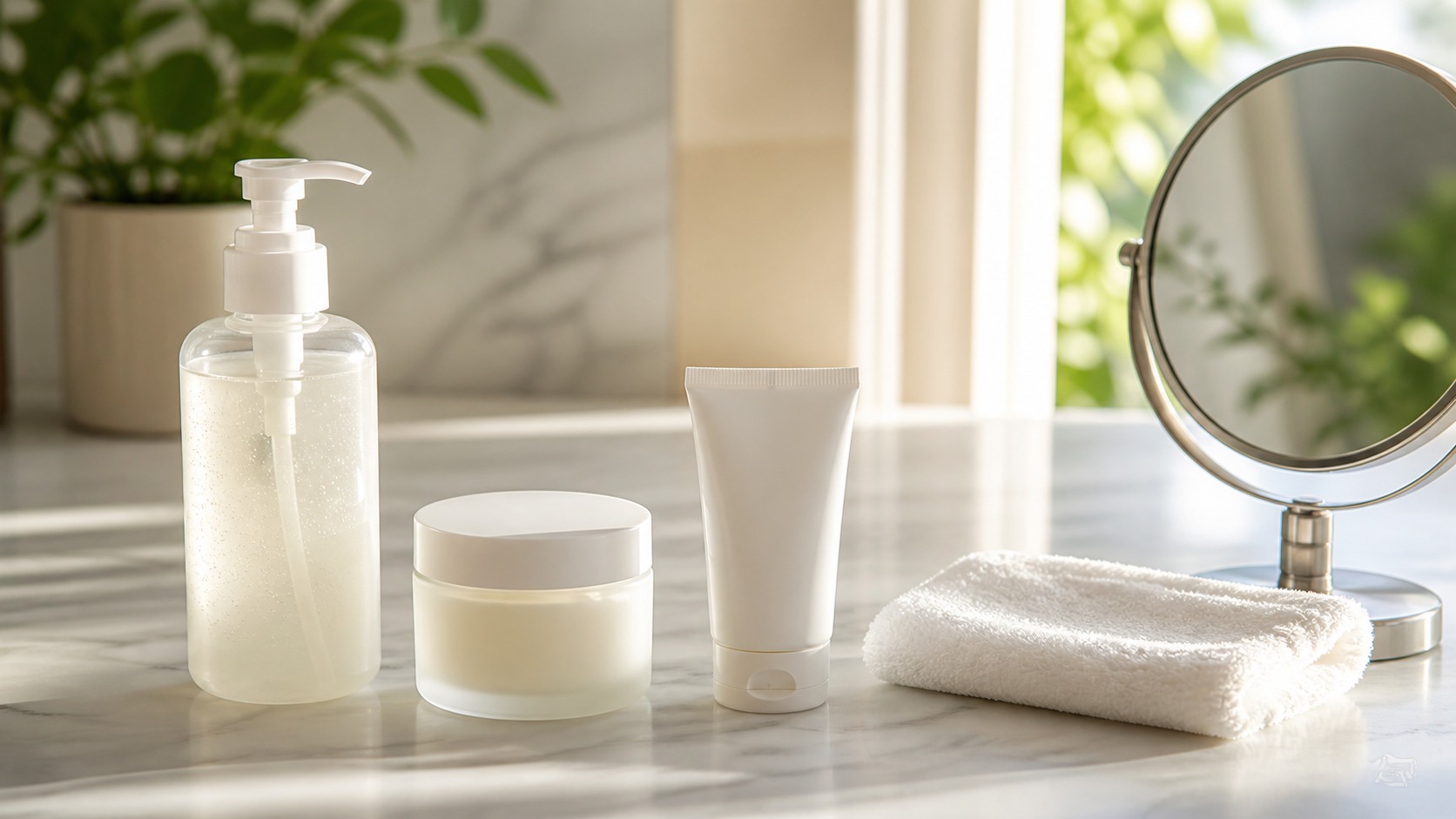
Clean skincare often looks beautiful: frosted glass, warm neutrals, leaves, linen, and minimalist type. Aesthetic can make a routine feel pleasant, but packaging is not formulation. Read the ingredient list, product purpose, and usage instructions. Check whether the brand explains fragrance, preservation, and skin type suitability.
Pretty products are allowed. They just should not be the only reason a product enters your routine.
Build Morning and Night Differently
The morning routine should protect the skin for the day: cleanse or rinse, moisturize if needed, and apply sunscreen. The night routine can focus on removing the day, repairing the barrier, and using treatments. This separation keeps the routine logical. Not every product belongs twice daily.
If your skin is sensitive, use actives at night and keep mornings simple. If your skin is oily, you may use lighter layers in the morning and more support at night. Clean routines should respond to skin behavior, not a rigid chart.
Keep a Product Diary at the Beginning
When building from scratch, notes help. Track start dates, reactions, and what improved. If a moisturizer stops tightness, write it down. If a serum creates bumps after three uses, pause it and record the pattern. This is not about obsessing; it is about avoiding the common beginner mistake of forgetting what changed.
After a few months, the routine becomes familiar and notes may not be necessary. At the start, they save money and confusion.
Know When to Stop Adding
A clean routine can become cluttered if every new launch sounds safer, greener, or more glow-giving than the last. Stop adding when your skin is comfortable and your goals are being addressed. More products mean more variables, more cost, and more chances for irritation.
Gloss Street’s clean routine rule is simple: build the smallest routine that reliably cleanses, moisturizes, protects, and treats your main concern. Once that works, the most sophisticated thing you can do is leave it alone long enough to see results.
Make Room for Real Life
Your routine should survive travel, late nights, busy mornings, and low-energy days. Keep a simplified version ready: cleanser, moisturizer, sunscreen. If the full routine collapses whenever life gets complicated, it is too fragile. Clean skincare should reduce decision fatigue, not create a nightly performance review.
The best routine from scratch is one you understand well enough to simplify without guilt. That is when it becomes yours.
Shop in Phases, Not in Hauls
The fastest way to confuse your skin is to start six new products in the same week. A clean skincare haul may feel organized because everything matches visually, but the skin experiences it as a pile of new variables. Shop in phases instead. Buy the cleanser and moisturizer first. Add sunscreen. Then wait. Once those products feel stable, choose one treatment if you need it.
This approach is less exciting, but it gives you useful information. If your cheeks feel tight, you know the cleanser or moisturizer needs adjustment. If your sunscreen pills, you can solve that pairing before adding serum. A routine from scratch should be built like a foundation, not like a display.
Let Skin Type Guide Texture
Clean skincare shoppers often focus on ingredient philosophy, but texture determines whether the product survives daily use. Dry skin may need creams, balms, and cushioned cleansers. Oily skin may prefer gels, light lotions, and sunscreens that set down cleanly. Combination skin may need different amounts in different zones. Sensitive skin may care more about fragrance-free simplicity than whether the bottle looks natural.
Texture is not superficial. A moisturizer that feels too heavy will be underused. A sunscreen that stings will be avoided. A cleanser that leaves the skin tight will make every later step work harder. Choose textures for the face you actually have.
Give Each Product a Job Description
Before adding anything, say its job out loud. The cleanser removes the day. The moisturizer supports the barrier. The sunscreen protects against UV. The serum targets dark spots. The exfoliant smooths texture. If you cannot name the job, the product probably does not belong yet. This small exercise prevents clean skincare from becoming a collection of vibes.
It also prevents overlap. You may not need three calming serums or two exfoliating toners. A clean routine should feel edited. Every product should earn its place through purpose, tolerance, and results.
Plan for the First Irritation Flare
Even careful routines can hit a rough patch. Weather changes, hormones, travel, stress, and product testing can all disturb the skin. Decide in advance what your reset routine is: gentle cleanser, bland moisturizer, sunscreen, and no actives until the skin calms. Having a reset plan keeps you from panic-buying more products when the skin really needs fewer.
A clean routine is not proven by never reacting. It is proven by how calmly you respond when the skin does react. Simplicity is a rescue tool as much as a starting point.
Budget for Rebuying, Not Just Trying
A routine only works if you can keep using it. When building from scratch, choose products you can afford to replace at the pace you use them. A cleanser and sunscreen run out faster than a treatment serum. A body-friendly sunscreen may need to be larger and more affordable than a tiny luxury tube. Clean skincare can become expensive quickly if every step is treated like a prestige purchase.
Spend where it changes compliance. If a sunscreen texture makes you apply enough every day, that may be worth more than an expensive serum. If a simple moisturizer keeps your barrier calm, do not replace it just because a prettier cream launched. Routine value is measured by repeated use, not shelf appeal.
It is also fine to mix price points. A clean-leaning routine can include a basic cleanser, a mid-priced sunscreen, and one carefully chosen treatment. The goal is not to prove devotion through cost. The goal is to build a routine that your skin and budget can live with for months.
When the Routine Is Working, It Should Feel Boring
A good starter routine should eventually become uneventful. Your skin feels clean but not tight. Moisturizer keeps comfort steady. Sunscreen goes on without a daily argument. Treatments do their job slowly without constant irritation. That kind of boring is a success, especially if you are used to chasing new products every week.
Once the routine is stable, resist the urge to rebuild it because a new clean launch looks more exciting. Add only when a clear need appears. Skincare from scratch becomes skincare that lasts when it stops depending on novelty and starts depending on consistency.
A from-scratch routine is also allowed to change slowly. Skin changes with weather, age, medication, stress, and lifestyle. The cleanser that worked in humid summer may feel too light in winter. The moisturizer that saved your barrier after travel may be too rich for daily use later. Clean skincare is not a contract with your past self; it is a framework you can adjust with care.
That flexibility keeps it sustainable.