Weak Nails Need the Right Kind of Strength, Not Just a Harder Shell
The best nail strengthener for weak, brittle nails is not always the most aggressive hardener on the shelf. Brittle nails can peel because they are dry, split because they are thin, bend because the plate lacks support, or snap because a rigid coating makes them less flexible under pressure. A smart strengthening routine begins by noticing how your nails fail during ordinary life, then choosing a formula that supports that exact weakness. When the product matches the problem, nails can feel tougher without becoming glassy, stiff, or more likely to break at the first bump.
A: No. Some add flexible support, while hardeners make the nail plate feel firmer and should be used carefully.
A: It can smooth and protect quickly, but peeling improves as the damaged edge grows out.
A: Yes, a shorter practical length reduces leverage and gives weak tips fewer chances to split.
A: Yes, oil can support flexibility around dry nails while the strengthener protects the surface.
A: If a product makes nails too rigid, they may snap instead of bending under pressure.
A: Many strengthening base coats are designed for that, but follow the product directions.
A: Use the schedule on the bottle because constant layering can chip and tempt peeling.
A: They may need a gentler phase if the surface looks dry, cracked, or overloaded.
A: Get help for pain, lifting, sudden color changes, thickening, or persistent splitting.
A: Gloves, gentle filing, careful removal, and daily moisture make the treatment work better.
Start by Reading How Your Nails Break
Weak nails do not all behave the same way, and that detail matters before you buy anything. Some nails peel in translucent layers at the free edge, which often points toward dryness, water exposure, or repeated polish removal. Others bend so easily that polish chips within a day, suggesting the nail needs a protective film and better daily support. A smaller group feels hard but snaps suddenly, which can happen when the nail is already too rigid.
Look at your bare nails for a week rather than judging them five minutes after removing polish. Notice whether the damage starts at the tips, sides, surface, or cuticle area. Pay attention to chores, handwashing, gel removal, typing, cleaning, and how often your hands sit in water. The right strengthening product becomes much easier to choose once you know the pattern you are trying to change.
This is why a bestselling bottle can work beautifully for one person and disappoint another. A formaldehyde-style hardener may help very soft nails but make dry, peeling nails feel worse. A flexible strengthening base coat may not feel dramatic, but it can be exactly what nails need when they split from everyday bending. Strength should mean resilience, not just hardness.
Also separate temporary damage from ongoing brittleness. Nails can look weak for several weeks after gel removal, aggressive buffing, or a run of frequent manicures, even if the new growth is healthier. In that case, the strengthener is partly a protective bridge while the damaged edge grows away. If the nail looks healthier near the cuticle than at the tip, patience and protection may matter more than switching bottles every few days.
Choose Flexible Support for Peeling Nails
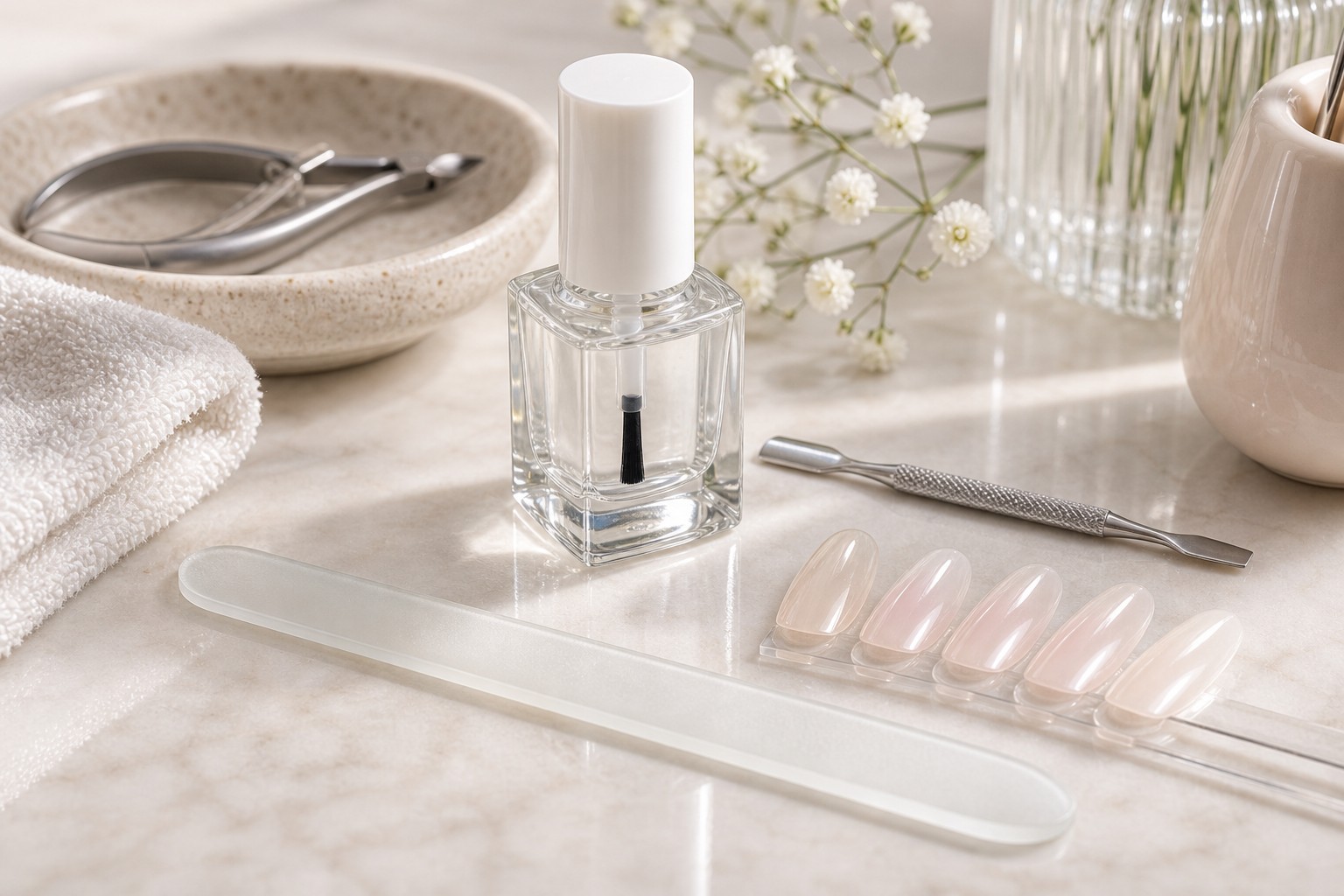
Peeling nails usually need more flexibility and moisture-aware protection than brute hardness. A flexible strengthener creates a thin shield that helps the layers stay together while the damaged edge grows out. Look for formulas described as strengthening base coats, ridge-smoothing treatments, or nail conditioners rather than only intense hardeners. These products can give weak nails a steadier surface without turning the tips brittle.
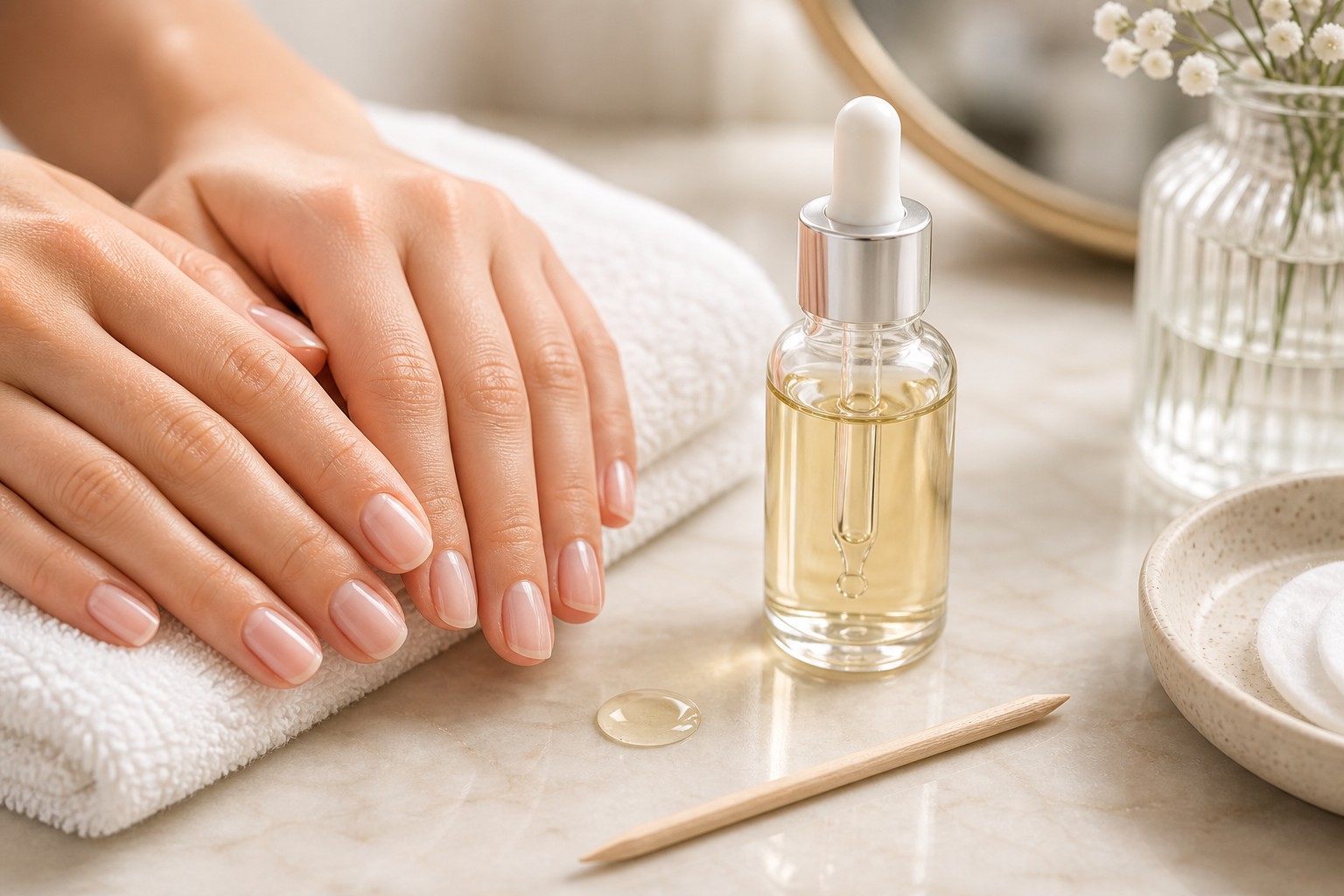
Hydration also belongs in the plan. Nails absorb and lose water repeatedly, and that swelling-shrinking cycle can encourage peeling. Cuticle oil, hand cream, gloves for wet chores, and gentler polish removal can support the strengthener so it is not doing all the work alone. A polish bottle cannot overcome constant water damage if the routine around it keeps stressing the nail plate.
When peeling is active, file the tips short and smooth. A ragged edge catches fabric and hair, which lifts layers further. A rounded or softly squared shape gives the strengthener a cleaner surface to protect. The goal is to stop new separation while the old weak edge gradually grows away.
Use Hardening Treatments With Restraint
Hardening treatments have a place, but they require judgment. They can help nails that are very soft, thin, and bendy, especially when the free edge cannot hold shape. The problem is that too much hardening can make nails less able to flex, and a nail that cannot flex may snap. A stronger nail should still have a little give when life applies pressure.
Follow the label schedule rather than applying more because the first coat feels promising. Many hardeners are meant to be used for a limited cycle, then paused or replaced with a gentler maintenance product. If nails begin cracking across the plate, feeling unusually stiff, or breaking lower on the nail, the treatment may be too intense for your current condition.
People often confuse immediate firmness with long-term improvement. A hardener can make nails feel stronger on day one because it coats the surface. True progress is visible when the new growth stays smoother, the tips peel less, and breaks become less frequent over several weeks. That slower measure is more useful than the first glossy finish.
Think of strong hardeners as short assignments rather than permanent personality traits for your nails. They can be useful when the nail is so soft that it folds before polish dries, but they should not be layered endlessly just because firmness feels satisfying. If you like the protected feeling, rotate into a flexible base coat once the tips behave better. That keeps the routine supportive without turning the nail plate into something too stiff for daily impact.
The warning signs are usually visible before a dramatic break happens. Tips may begin splitting sideways, corners may chip in hard little triangles, or the nail may feel tight after removal. Those clues suggest the nail needs conditioning support and gentler handling. Strength that makes nails less adaptable is not really strength; it is temporary stiffness with a cost.
Treat the Edges Like the Weak Point
Most brittle nail drama happens at the free edge. That is where layers separate, polish chips, corners snag, and tiny cracks turn into breaks. A good strengthener should be wrapped lightly over the edge when the formula allows it, because sealing the tip helps reduce water entry and mechanical lifting. The edge is not an afterthought; it is the stress zone.
File in one controlled direction with a fine-grit file rather than sawing aggressively. Harsh filing can create tiny tears that make brittle nails look worse a few days later. Keep length practical while the nails recover. Long weak nails are not proof of progress if every day involves emergency repairs.
Edge care is also where daily behavior shows up fastest. If you tap nails on counters, scrape labels, open cans, or pick at product, the free edge absorbs that stress before any treatment can protect it. A strengthener can reduce vulnerability, but it cannot turn nails into tools. Changing those tiny habits is often the difference between nails that stay neat for a week and nails that start peeling the next day.
Build a Weekly Routine That Nails Can Tolerate
A realistic nail-strengthening routine usually has a rhythm. Start with clean, dry nails, apply the treatment as directed, refresh or remove it on schedule, and give the cuticle area oil daily if your nails are dry. Avoid piling coat after coat for weeks without removal, because old layers can chip unevenly and tempt you to peel them off. Peeling off treatment removes nail layers, which defeats the purpose.
Polish remover should be used with care. Acetone is efficient but can feel drying when used often, while non-acetone removers may require more rubbing. Either way, the damage often comes from frequency and friction. If your nails are already fragile, plan manicures so removal is not happening every other day.
The best routine is boring in the nicest way. Weak nails respond to consistent low-stress habits more than dramatic rescue missions. A product that fits into your week is usually better than an extreme treatment you abandon after two irritating applications.
A weekly photo can help because nail progress is slow enough to miss day by day. Take a quick bare-nail picture after removal, in similar lighting, and compare the free edge over several weeks. You are looking for fewer peeled layers, smoother tips, and less emergency filing. That record can keep you from abandoning a sensible routine just before the healthier growth becomes obvious.
Know When Nails Need More Than Cosmetics
Nail strengtheners are cosmetic support, not medical diagnosis. If nails are suddenly changing, lifting, thickening, yellowing, deeply ridged, painful, or separating from the nail bed, a professional opinion is smarter than trying another polish. Nutrition, medications, thyroid changes, eczema, psoriasis, fungal infection, and repeated trauma can all affect nails. A bottle cannot solve every cause of brittleness.
That said, ordinary weak nails often improve when the routine becomes gentler. Gloves during cleaning, fewer harsh removals, less picking, steady oil, and a suitable strengthener can make a visible difference by the time healthier growth reaches the tips. The improvement is gradual because nails grow slowly, so patience is part of the treatment.
Match the Finish to Your Real Life
Some strengtheners dry shiny and can be worn alone. Others work best as base coats under polish. A few leave a sheer tint that makes recovering nails look cleaner while they grow. Choose the finish you will actually wear, because the best ingredient list is not useful if the product sits untouched in a drawer. Daily life should guide the purchase as much as marketing claims.
If you work with your hands, wash frequently, or type all day, durability matters. If you prefer bare nails, a clear treatment with a natural finish may feel easier. If polish keeps you from biting or picking, a strengthening base under color may be the better behavioral tool. Nail care is partly chemistry and partly habit design.
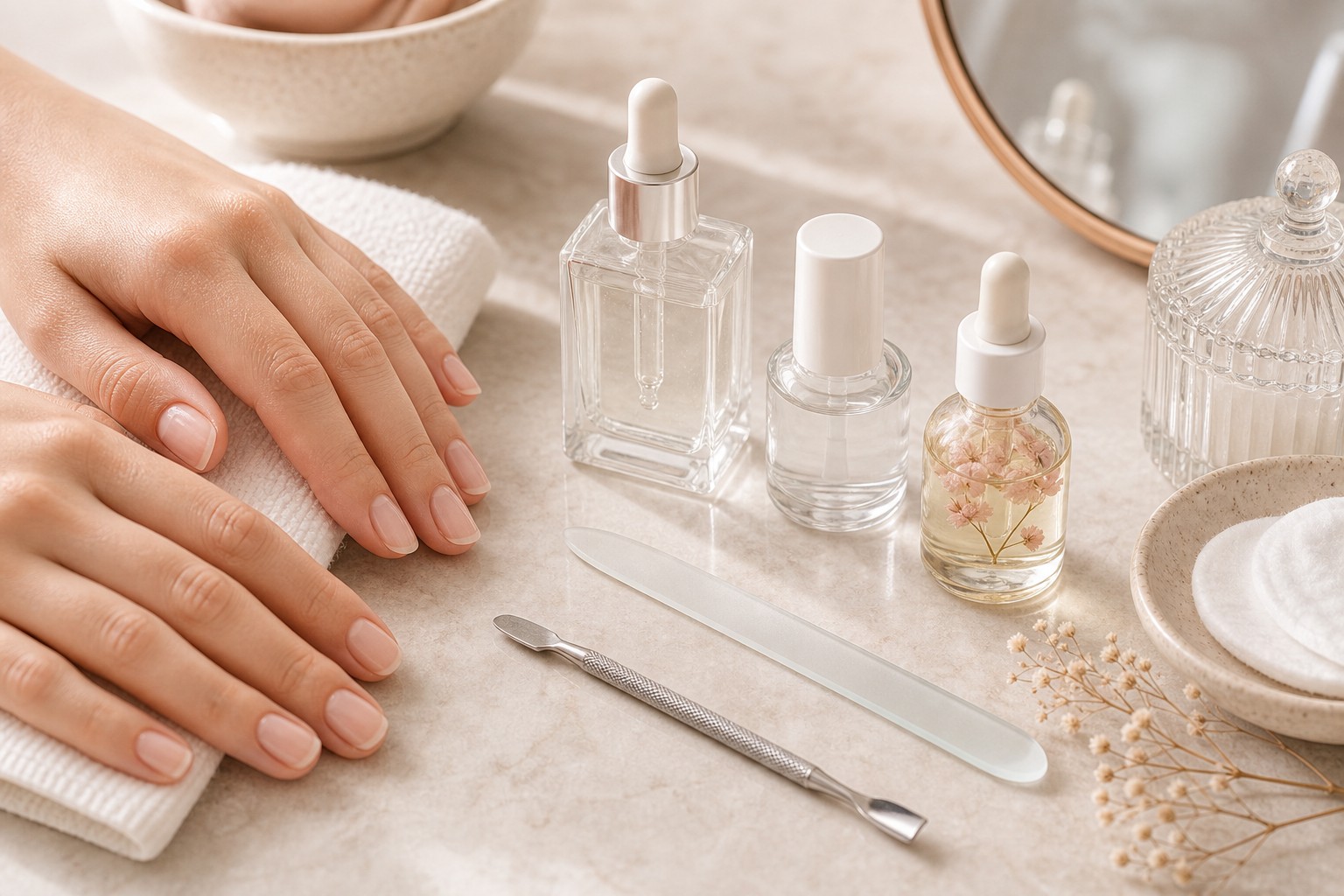
Gloss Street’s take is simple: weak nails need resilience. Choose a strengthener that matches peeling, bending, splitting, or dryness, then support it with oil, practical length, gentle removal, and protection from wet chores. The best product is the one that helps your nails grow out calmer, not the one that makes them feel artificially hard for one afternoon.
For a polished bare-nail look, choose a sheer milky or clear formula that smooths without announcing itself. For color wearers, choose a strengthener that grips polish well and does not make your manicure peel in sheets. For chronic pickers, even a subtle tint can help because the nail looks intentionally finished. The product should reduce the habits that weaken nails, not simply decorate the evidence afterward.
If your nails are weakest after salon removal, build recovery weeks into your calendar before the next appointment. Use a practical length, a flexible treatment, and extra oil rather than jumping straight into another heavy enhancement. This does not mean giving up manicures. It means giving the nail plate enough recovery time that beauty maintenance does not become a repeating injury.
When a Strengthener Is Working
A working strengthener usually makes daily nail life quieter. You may notice fewer snags when washing hair, less peeling after typing, and fewer corners that need emergency filing. The nail may not look dramatically longer at first because the most damaged part is still at the tip. Real success is that new growth reaches the edge with fewer interruptions.
If nothing improves after consistent use, change only one variable at a time. Switch from a hardener to a flexible product, reduce remover frequency, add gloves for water chores, or shorten the nail shape. Changing everything at once makes it hard to know what helped. A calm, measured routine is more useful than a drawer full of half-tested treatments.