
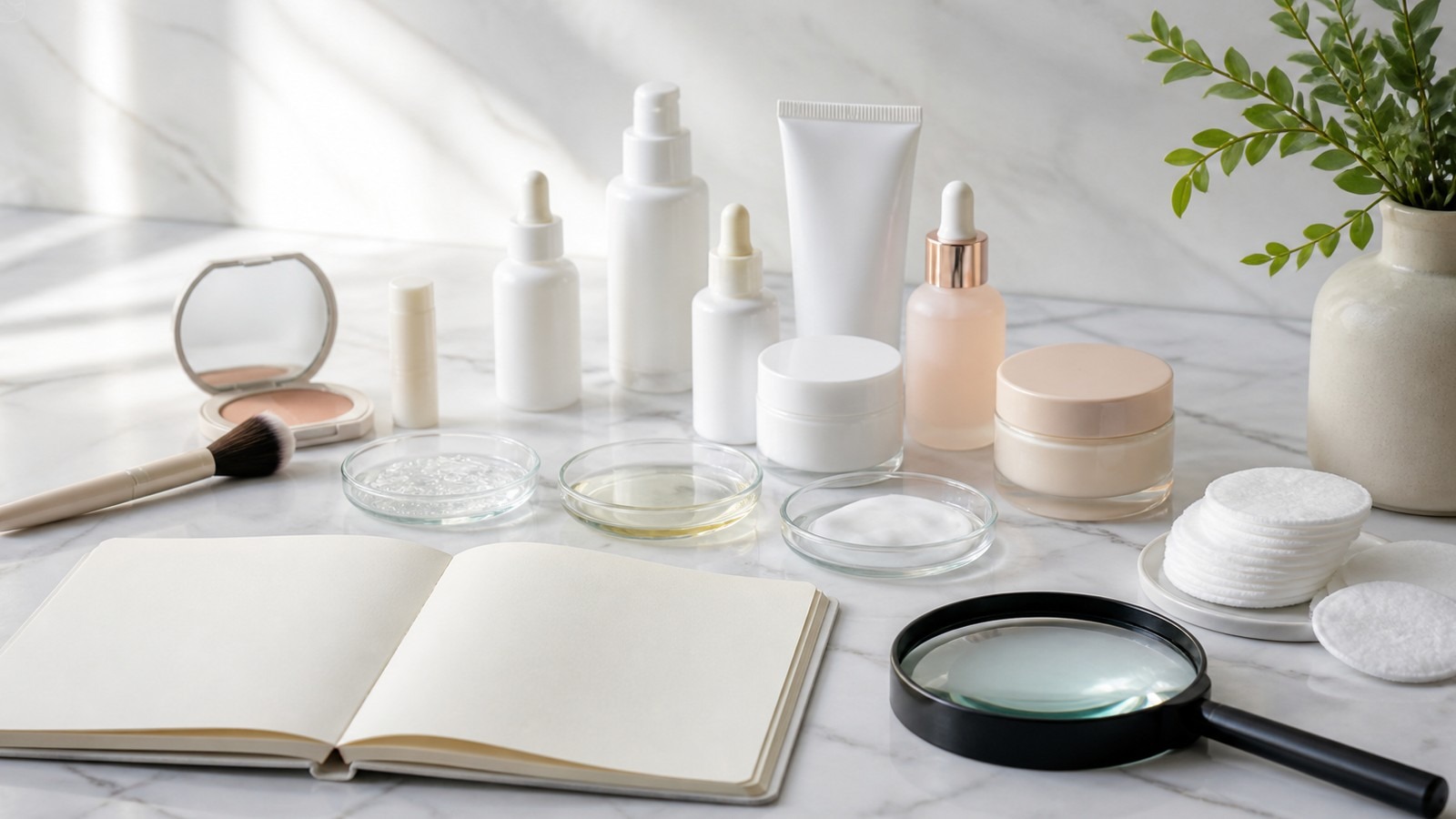
A Good Avoid List Should Make Beauty Calmer
Avoid lists can be helpful, but only when they are specific enough to guide real choices. Long-term skin health is not protected by fearing every unfamiliar ingredient. It is protected by understanding which exposures matter most, which products sit near sensitive areas, and which formulas have repeatedly bothered your own skin. The best approach is calm and practical: reduce avoidable irritants, buy from reputable sources, respect preservation, and let evidence matter more than panic.
A: No. Focus first on credible concerns, personal triggers, and products used near sensitive areas.
A: No, but fragrance-free is often easier for reactive skin and long-term troubleshooting.
A: Not by default. Appropriate preservation helps keep many products safer during use.
A: No. Natural ingredients can irritate, oxidize, or be poorly preserved.
A: Keeping old eye products and buying from questionable sellers can create avoidable problems.
A: Yes, especially if the product is scented or full of botanical extracts.
A: Use them as a clue, not proof, because standards vary.
A: Stop the product, simplify the routine, and seek professional help if the reaction is severe.
A: No. Persistent rashes, acne, or allergies need individualized guidance.
A: Prioritize fragrance-free basics, reputable brands, fresh products, and sunscreen.
Long-Term Skin Health Needs a Calm Avoid List
Long-term skin health is not protected by panic. It is protected by patterns: choosing reputable products, avoiding personal triggers, respecting sensitive areas, and understanding which ingredients deserve a second look. A useful avoid list should help you shop with more confidence, not make every jar on the shelf feel suspicious.
The most important distinction is between a credible concern and a scary headline. Some ingredients are worth avoiding because they frequently irritate, complicate allergies, or raise contamination questions. Others are controversial online but more nuanced in regulated formulas. A good routine leaves room for that difference.
A long-term avoid list should work like a triage system. Ingredients and habits that touch the eyes, lips, broken skin, or daily leave-on products deserve more attention than a rinse-off product used once a week on resilient body skin. Exposure matters. Placement matters. Frequency matters.
This article takes a prioritization approach because that is how real routines function. A person does not need to become a cosmetic chemist to shop better. They need to know which categories are worth slowing down for and which online alarms can be kept in proportion.
A calm avoid list also leaves room for replacement habits. If fragrance is a problem, the replacement is not fear; it is a fragrance-free moisturizer you can use every day. If counterfeit makeup is the concern, the replacement is buying from authorized retailers. Each avoid item should point toward a better behavior, otherwise the list becomes a source of worry instead of a tool.
Fragrance Is the First Practical Filter
Fragrance is one of the most useful first filters because it is common, often unnecessary, and difficult to decode when it appears as a single word. It may be fine for some people, but it can be a predictable problem for reactive skin, eyelids, lips, and compromised barriers.
Avoiding fragrance does not mean every scented product is dangerous. It means you are removing one common source of irritation from products that sit on the skin for hours. For long-term skin health, fewer avoidable irritants usually make routines easier to sustain.
Fragrance is not the villain in every routine, but it is one of the easiest variables to remove when skin is unhappy. It can appear in face creams, masks, cleansers, lip products, sunscreen, body lotions, and hair products that migrate onto the face. For people with recurring irritation, that reach makes it worth investigating.
The practical test is simple: if several unrelated products sting, flush, or itch, switch the leave-on steps to fragrance-free before blaming every active ingredient. This one change often makes the rest of the routine easier to understand.
This is especially useful when a routine contains many products. A cleanser, serum, moisturizer, sunscreen, foundation, and lip balm can all carry scent. Removing fragrance from the leave-on steps first can reveal whether the skin is reacting to actives or simply to a repeated background irritant.
Fragrance-free does not have to mean boring. It means the formula is not asking scent to carry the product experience. Texture, hydration, finish, and wear can still make the product feel beautiful.
For shoppers who love scent, the compromise can be placement. Fragrance in a body wash may be easier to tolerate than fragrance in an eye cream, lip balm, or daily face moisturizer. The avoid list becomes less restrictive when it is guided by exposure.
Eye and Lip Products Deserve Extra Caution
The eye and lip areas deserve stricter standards than the arms or legs. Mascara, liner, lash glue, lipstick, gloss, and balm sit near delicate tissue or are repeatedly ingested in tiny amounts through normal wear. This does not mean those products should be feared, but it does mean they should come from trustworthy brands with clear safety practices.
Old mascara, shared eye products, harsh flavoring, and glitter not approved for eyes can be more concerning than a single ingredient name. Long-term skin health includes habits as much as formulas.
Mascara and liner sit near mucous membranes, and lip products are reapplied often in a zone that is constantly moving, eating, drinking, and healing from dryness. That is why these categories deserve stricter standards than a body shimmer or hand cream.
The avoid list here includes more than ingredients. Do not share mascara. Do not revive dried tubes with water. Do not use craft glitter around the eyes. Do not keep a gloss that makes the mouth peel simply because the shade is perfect. Long-term skin health is built from these unglamorous decisions.
These categories also expire emotionally before they expire physically. People keep a mascara because it was expensive or a lipstick because the color is hard to find. Long-term skin health sometimes means being ruthless with products that touch vulnerable areas, even when the shade or formula once felt perfect.
Preservation Is Not the Enemy
Many people trying to avoid toxic ingredients become suspicious of preservatives, but under-preserved products are not safer. Water-based skincare, mascara, liquid makeup, and jar creams need preservation because they are opened repeatedly and exposed to air, fingers, brushes, and bathroom humidity.
A clean avoid list should focus on preservation systems that suit your skin rather than pretending preservative-free is automatically better. The goal is a product that remains safe and comfortable through real use.
Preservatives can sound suspicious to clean beauty shoppers, yet they often make a product safer. A water-based cream or mascara that lacks adequate preservation can become a bigger risk than a formula preserved with a well-studied system.
The better question is not whether the product contains a preservative. The better question is whether the product type needs one, whether the brand is transparent, and whether your own skin tolerates the system being used. Preservative fear can push people toward products that are less stable, not more skin-friendly.
Think about product format before judging a preservative. A dry powder has different needs from a mascara, and a pump bottle faces different exposure than a jar used with fingers. The safest choice is not the product with the shortest preservative story; it is the product whose preservation matches its real-world use.
This is especially important for people who keep products for a long time. A cream that is opened daily for six months needs a different level of protection than a single-use sample. Long-term skin health includes the life of the product after purchase.
Contamination Concerns Need Brand Accountability
Heavy metals, asbestos contamination in talc, and questionable counterfeit products are often not label-reading problems. They are quality-control problems. That is why brand reputation, testing standards, authorized retailers, and transparent sourcing matter so much.
A product can have a beautiful ingredient list and still be a poor choice if the supply chain is careless. Long-term skin health depends on buying from companies that can answer serious quality questions without vague reassurance.
Some concerns cannot be solved by reading the front of the box. Heavy metals in color cosmetics, talc purity, and counterfeit products are quality-control issues. The ingredient list may not tell you what testing happened or whether the product came through a reliable supply chain.
This is why authorized retailers matter. A luxury product bought from an unknown seller at a suspicious price is not a bargain if the formula is fake or poorly stored. Skin health starts before application.
For color cosmetics, accountability is more useful than panic. Pigments, powders, and minerals can be safe in well-controlled systems, but shoppers rarely see the testing behind them. That makes brand transparency and retailer reliability part of the safety decision, not extra homework.
Natural Ingredients Can Still Be Irritating
Natural extracts, essential oils, citrus oils, and botanical fragrance components can feel aligned with clean beauty values, but they are not automatically gentle. Skin reacts to chemistry, not marketing categories. A plant-derived ingredient can irritate just as surely as a synthetic one can be well tolerated.
This matters most for people with eczema, rosacea, acne, allergies, or a history of stinging products. Your personal reaction history should shape your avoid list more than a broad natural-versus-synthetic rule.
Natural ingredients can be wonderful, but they are not exempt from irritation. Essential oils, citrus extracts, spice-derived fragrance components, and complex botanical blends can all create problems for certain users. The skin does not give a free pass because an ingredient came from a plant.
This point is especially important for people with eczema, rosacea, allergy history, or a damaged barrier. For them, a shorter fragrance-free product may be safer than a lush natural formula packed with aromatic extracts.
Use Your Own Skin History
The best avoid list starts with the products that have actually bothered you. If lip balms make your mouth peel, examine flavoring and fragrance. If eye creams sting, simplify around the eyes. If heavy oils clog you, watch richer face products even when they are marketed as clean.
That personal evidence keeps the list from becoming endless. Instead of trying to avoid every ingredient someone has ever criticized, you prioritize the exposures that matter for your skin and your routine.
Your own history is better than a generic internet list. If every minty lip balm makes your lips crack, avoid that category. If eye creams with fragrance sting, stop testing scented eye products. If rich oils clog your chin, treat that pattern as data.
The strongest avoid list is personal and short enough to use. It should travel with you through sales, product launches, and recommendations from friends. A list that becomes too long to remember usually stops helping.
A written note can help. Record the product name, where you used it, what happened, and how quickly the reaction appeared. Over time, patterns become visible: mint in lip products, fragrance near the eyes, rich balms on the chin, or waterproof formulas that require too much rubbing to remove.
Gloss Street’s Take
Avoid lists are useful when they make shopping clearer. They become harmful when they turn beauty into constant anxiety. The goal is not a perfect ingredient life; it is a more thoughtful routine with fewer avoidable problems.
For long-term skin health, choose fragrance-free when sensitive, respect eye and lip products, avoid counterfeit sellers, pay attention to contamination concerns, and let your skin’s history guide the rest. That is practical, realistic, and much easier to maintain.
Gloss Street’s take is that long-term skin health is protected by boring consistency. Fresh products, gentle cleansing, sunscreen, fragrance awareness, reputable retailers, and respect for sensitive zones will do more than a panic list copied from a comment thread.
Avoid lists are most useful when they give you confidence. If they make you afraid of every product you own, they have stopped serving the routine.


