Matte and Glossy Lipsticks Behave Differently Because Their Formulas Are Built Differently
The difference between matte and glossy lipstick is not just a finish choice. It is chemistry you can feel every time the product touches the lips. Matte formulas use more grip, pigment density, powders, wax structure, and film-forming ingredients to reduce shine and improve wear. Glossy formulas lean on oils, emollients, shine agents, and flexible slip to reflect light and make lips look smoother. Neither finish is automatically better. They are engineered around different tradeoffs: comfort versus transfer resistance, softness versus structure, shine versus pigment intensity, and flexibility versus hold.
A: Matte formulas often use less slip, more powder, and more grip to reduce shine and transfer.
A: Gloss relies on oils and shiny emollients that move more easily during talking, eating, and drinking.
A: Yes, liquid mattes often set through solvents and film formers, while bullets rely more on wax structure.
A: Light reflection across a shiny surface can make the lips appear fuller and smoother.
A: Yes, flexible binders and modern emollients can make matte finishes softer than older formulas.
A: Cracking can come from thick layers, dry lips, rigid films, or not enough flexible emollient.
A: Often, because satin formulas keep some shine and comfort while offering more structure than gloss.
A: High pigment loads need good dispersion, and uneven lips can make deep matte shades look broken.
A: Some formulas cling better, but high shine usually trades off with transfer resistance.
A: The best finish depends on whether you want grip and color intensity or shine and comfort.
Finish Begins With How Light Hits the Lip
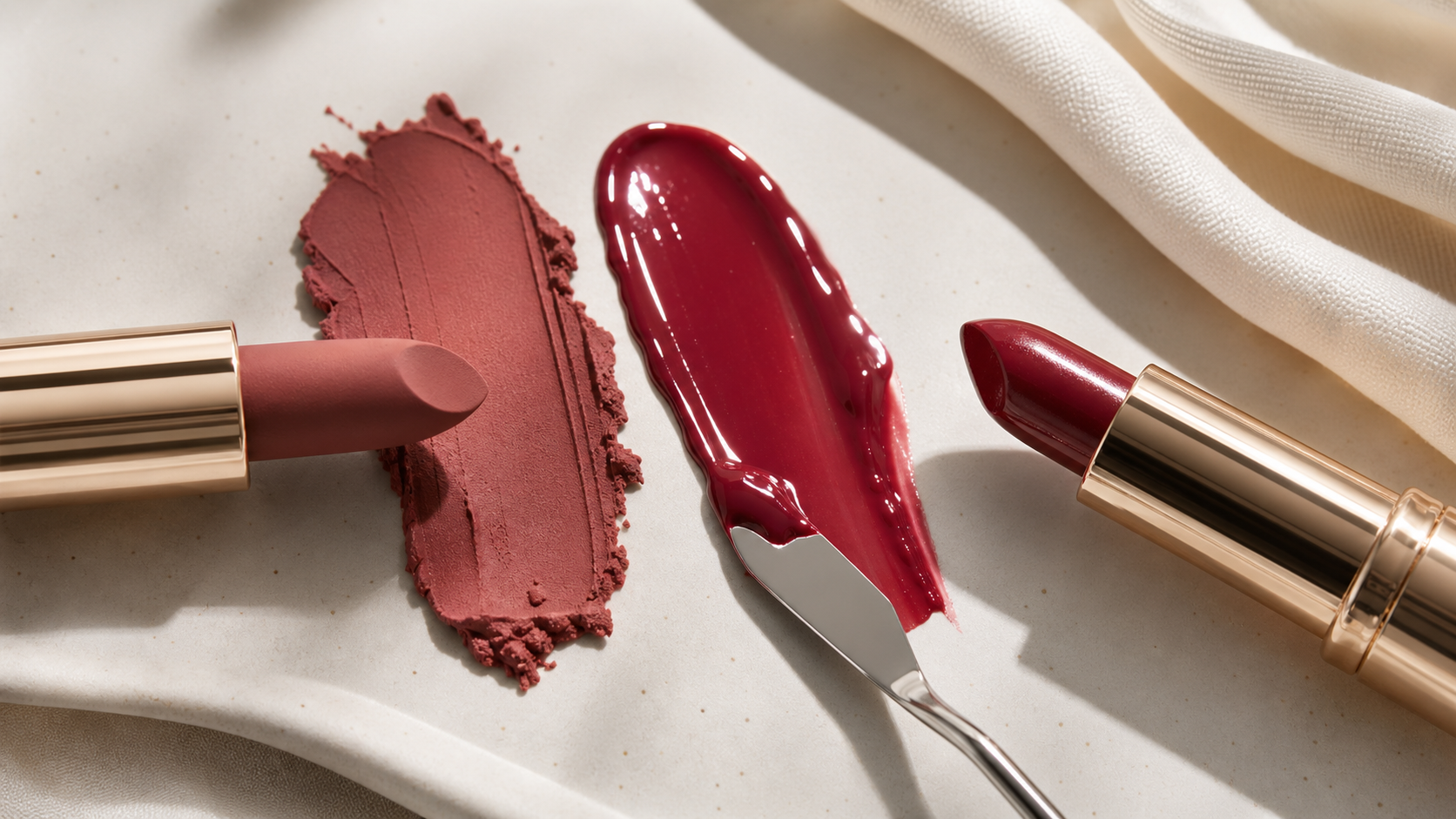
A glossy lipstick reflects light in a smoother, more mirror-like way. Oils and shiny emollients create a surface that bounces light back, making lips look fuller and more hydrated. Matte lipstick does the opposite. It scatters light through powders, pigments, waxes, and a less reflective surface, which makes the color look flatter, softer, and often more intense.
This light behavior explains why the same shade can look different in matte and glossy formulas. A red gloss may look juicy and dimensional because the shine breaks up the pigment. A matte red can look deeper and more graphic because the color is not interrupted by wet reflection. The pigment may be similar, but the surface changes the visual effect.
Texture also changes perception. A glossy formula can blur fine lip lines by filling them with shine, while a matte formula can emphasize dryness if the surface is uneven. That does not mean matte is bad. It means matte needs a smoother canvas and a formula that balances dryness with grip.
This is why finish can change the perceived size of the mouth. Shine catches the high points of the lips and can make curves look plush, while matte color defines the outline more firmly. A matte finish can look elegant and sculpted, but it will not create the same reflective volume. The chemistry changes both color and shape perception.
Waxes Give Lipstick Its Shape and Drag
Waxes are structural ingredients. They help a lipstick hold its bullet shape, resist melting, and deposit color with control. Matte lipsticks often rely on a firmer wax structure so the formula lays down pigment without looking slippery. That structure can create the familiar drag of a matte bullet. Glossy lipsticks and balm-like formulas usually feel softer because the wax balance is more flexible and oil-rich.
Different waxes affect hardness, payoff, and melting point. A formula needs enough structure to survive a purse, but enough glide to apply smoothly. If the wax system is too stiff, lipstick can skip across the lips. If it is too soft, it can smear, feather, or lose shape quickly.
Liquid matte formulas use a different kind of structure. They may apply wet, then set as solvents evaporate and film formers lock pigment onto the lips. The chemistry feels very different from a waxy matte bullet, even though both end in a shine-free finish.
Oils and Emollients Decide Slip and Comfort
Glossy lipsticks feel comfortable because oils and emollients reduce friction. They help the product glide, cushion lip lines, and create shine. The tradeoff is movement. A product with more slip usually transfers more easily to cups, hair, masks, and teeth. That movement is part of why glossy formulas often need reapplication.
Matte formulas use less free slip because shine and movement work against the finish. They may still include emollients, but those ingredients have to be balanced so the formula stays matte and attached to the lips. Too much oil can make a matte formula break down. Too little comfort can make it feel tight.
Modern matte lipsticks try to solve this by using lighter emollients, flexible film formers, and soft-focus powders. The goal is a matte look without the old chalky feeling. Some succeed beautifully, while others still feel dry because the formula leans too hard on wear.
This is why comfort varies widely within each finish category. A satin-matte bullet, a powder matte, a transfer-proof liquid matte, and a velvet mousse are all technically matte-adjacent, but their emollient systems can feel completely different. The finish name gives a clue, but the ingredient balance decides the real wear experience.
Pigment Load Changes Payoff and Feel
Matte lipsticks often look more saturated because they can carry a high pigment load with less shine diluting the visual effect. More pigment can mean stronger color in one swipe, sharper lip shape, and better coverage over natural lip tone. It can also make the formula feel drier or thicker if the pigment is not dispersed well.
Glossy formulas may use less pigment or suspend pigment in a shinier base. That creates translucency, dimension, and a softer edge. A glossy berry can look wearable because the natural lip color shows through, while a matte berry in the same family may look bold and opaque. The chemistry changes the mood of the shade.
Pigment dispersion is critical. Clumpy pigment can make matte lipstick patchy and glossy lipstick streaky. Good formulas coat and suspend pigments so color spreads evenly. That invisible work is one reason two lipsticks with similar ingredients can perform very differently.
Pigment also affects staining. Some dyes and pigments leave color behind after the emollient base wears away, while others disappear more cleanly. A glossy stain and a creamy gloss may both shine at first, but their wear-down can be very different. That difference comes from the colorants as much as the finish.
Opacity also affects how precise the lip line needs to be. A sheer glossy formula can blur softly at the edge and still look intentional. An opaque matte shade shows every wobble because the pigment boundary is stronger. That is why liner feels optional with some glosses and essential with certain mattes.
Powders Create Blur but Can Steal Moisture
Matte formulas often use powders, silica, starches, or other soft-focus ingredients to reduce shine and blur texture. These ingredients scatter light, help the finish look velvety, and can improve grip. The downside is that powders can make lips feel drier, especially if the skin is already flaky or dehydrated.
Powders also affect how lipstick layers. A powdery matte may grip well at first but become crumbly if you add more product later. A creamier matte may reapply more smoothly but transfer more. The best formula balances powder with flexible binders so the finish stays soft instead of dusty.
Glossy formulas usually rely less on powder because powder fights shine. When a glossy product includes too much oil and not enough structure, it can feel plush but disappear quickly. When it includes the right balance, it gives shine without sliding everywhere.
This powder-versus-shine tension is the heart of the matte and glossy divide. One finish wants to diffuse light; the other wants to reflect it. Every formula has to decide which effect matters more.
Soft-focus ingredients can make matte lipstick photograph beautifully. They reduce glare and make the lip line look velvety. The same ingredients can feel less forgiving in dry indoor air or on chapped lips. Formula elegance is about making that blur feel comfortable, not just making it look smooth for the first ten minutes.
That is why some matte formulas feel better with a very thin balm residue underneath, while others lose their grip immediately. The powder system and binder system decide how tolerant the lipstick is. A formula that handles prep well usually feels easier for everyday wear.
Film Formers Explain Long Wear
Long-wear lipsticks often use film-forming polymers that create a flexible layer over the lips. In liquid matte formulas, this film can help pigment stay put after the wet phase evaporates. That is why some liquid mattes feel weightless but locked on. The same mechanism can also make lips feel tight if the film is too rigid.
Glossy long-wear products are harder to engineer because shine usually means movement. Some use two-step systems, where a color layer sets first and a glossy topcoat adds shine. Others use tackier shine agents that cling better than traditional gloss. The chemistry is trying to keep reflection without letting the whole formula slide off.
Transfer resistance often comes with compromise. The more a formula grips, the less balm-like it may feel. The more cushion it gives, the more likely it is to leave marks. Understanding that tradeoff helps shoppers choose based on the day instead of expecting one lipstick to do everything.
Film formers also explain why some long-wear lipsticks feel better after a few minutes. The wet phase may feel thin or slippery, then the film settles into a more stable layer. Disturbing it too soon can create patchiness. Letting the chemistry finish its set time often improves the result.
Application Changes the Chemistry You Experience
Lip prep changes how both finishes behave. Matte lipstick needs smooth, flexible lips because it will not hide flakes well. Glossy lipstick can be more forgiving, but it can also pool in texture if the lips are very dry. A light balm before lipstick can help, but too much balm can break down matte grip or make gloss bleed.
Let lip balm absorb before applying matte lipstick. Blot if needed. For glossy lipstick, a lip liner can provide structure so the shine stays inside the shape. For liquid matte formulas, apply a thin layer and let it set before pressing lips together repeatedly. Technique can make the formula feel better or worse.
Removal matters too. Long-wear matte formulas often need an oil-based remover because the film is designed to resist water and casual rubbing. Glossy formulas usually wipe away more easily but may leave pigment behind. Gentle removal protects the lips so the next application looks smoother.
Layer order changes performance. Lip balm under matte lipstick can improve comfort, but too much balm weakens adhesion. Lip liner under gloss can create a boundary, but a waxy liner may also change how the gloss spreads. The formula on the lips is really the combination of every layer you applied.
Temperature can also change the experience. A matte bullet may drag more in a cold room, while a gloss can feel thinner when warm. Keeping products closed and away from heat helps the texture stay closer to the formula the brand intended. Lipstick chemistry is practical, not only theoretical.
Choose Finish by Tradeoff, Not Trend
Matte lipstick is useful when you want definition, bold color, lower shine, and better transfer resistance. It can be excellent for statement lips, events, photos, and days when you do not want hair sticking to your mouth. Glossy lipstick is useful when you want comfort, dimension, fresh shine, and a softer edge. It can make lips look fuller and more casual.
Neither finish is universally more sophisticated. A matte nude can look flat if the lips are dry, while a gloss can look polished when the rest of the makeup is balanced. A glossy red can feel modern and editorial, while a matte red can feel classic and precise. The formula architecture shapes the personality of the color.
The best choice depends on your lips, schedule, and tolerance for maintenance. If you hate reapplying, choose a matte or satin long-wear formula. If you hate tightness, choose gloss, balm, satin, or a flexible velvet finish. Beauty chemistry becomes useful when it helps you choose the right compromise.
Gloss Street’s Take
Matte and glossy lipsticks are not just aesthetic opposites. They are different formula systems built from waxes, oils, emollients, pigments, powders, and film formers. Matte formulas manage light by reducing shine and increasing grip. Glossy formulas manage light by creating reflection, slip, and dimension.
Once you understand the chemistry, lipstick shopping gets easier. You stop asking why one formula cannot be weightless, glossy, transfer-proof, moisturizing, and fully opaque all day. Instead, you choose the finish whose tradeoffs match the moment.
That is why the same person can love both finishes for different reasons. Matte gives structure, mood, and controlled color. Gloss gives light, softness, and movement. The chemistry is not competing; it is offering different ways to design a lip look.
The smartest lipstick wardrobe usually includes more than one finish. A flexible gloss, a comfortable satin, and a reliable matte can solve different makeup days. Understanding the chemistry helps you stop asking one tube to behave like three formulas at once.