Finding Moisture That Does Not Fight Your Skin
Sensitive skin changes the moisturizer search from a simple texture preference into a question of comfort, barrier support, and ingredient restraint. The best choices usually do less in the most thoughtful way: they cushion the skin, reduce water loss, and avoid the fragrance-heavy extras that can make a reactive face feel even more unsettled. For Gloss Street readers, dermatologist-style moisturizer advice is not about chasing the richest jar or the trendiest label; it is about matching the formula to your barrier, your climate, and the way your skin behaves after cleansing.
A: A fragrance-free cream or lotion with barrier-support ingredients is usually the calmest place to start.
A: Often yes, but lower-strength formulas are easier to tolerate than intense treatment products.
A: Not automatically; fragrant plant extracts can still irritate reactive skin.
A: No. Brief awareness can happen, but burning or itching is a warning sign.
A: No. Many sensitive-skin-friendly formulas are simple and moderately priced.
A: Yes. Skipping moisturizer can worsen barrier stress and rebound oiliness.
A: Several days of small-area testing gives better information than one quick try.
A: Often yes. Winter may require more occlusive support than humid summer.
A: It can help dry patches, but easily congested or heat-prone skin should use it sparingly.
A: See a dermatologist for swelling, persistent rash, cracking, or painful reactions.
Why Sensitive Skin Needs A Barrier-First Moisturizer
A moisturizer for sensitive skin should be judged first by how well it protects the barrier. The outermost layer of skin works like a living shield, holding water in while keeping irritants, pollution, and harsh ingredients from getting too much access. When that shield is stressed, even ordinary products can sting or leave the skin looking flushed. A barrier-first moisturizer helps reduce that cycle by reinforcing comfort before trying to do anything flashy.
Dermatologists often look for a balanced mix of humectants, emollients, and occlusives. Humectants such as glycerin and hyaluronic acid attract water. Emollients smooth roughness and help the skin feel more flexible. Occlusives reduce water loss, which is especially helpful when the air is dry, the skin is over-cleansed, or the face feels tight shortly after washing.
The best formula is not always the heaviest one. Some sensitive skin is dry and benefits from a cream, while other sensitive skin is combination, acne-prone, or easily congested. The goal is steady comfort: skin that feels less tight after cleansing, less prickly when products touch it, and less reactive by the end of the day.
Ingredients Dermatologists Often Like
Ceramides are one of the most useful ingredient families for sensitive skin because they echo lipids naturally found in the barrier. They do not need to feel dramatic to work. A ceramide cream or lotion can quietly improve the way skin holds moisture, especially when paired with cholesterol and fatty acids in a barrier-support formula.
Glycerin, panthenol, colloidal oatmeal, allantoin, squalane, and niacinamide can also be helpful when used in well-tolerated amounts. Each has a different role: some hydrate, some soften, and some help reduce the look of irritation. The important detail is that sensitive skin usually prefers a calm supporting cast over a long ingredient list trying to solve every concern at once.
What To Avoid When Your Face Reacts Easily
Fragrance is the most obvious place to be cautious. That includes essential oils, perfume blends, and fragrant botanical extracts that may sound gentle but still behave like common irritants. A product can smell beautiful and still be wrong for reactive skin. For many people, fragrance-free is a more useful label than natural, clean, or spa-inspired.
High-strength exfoliating acids, drying alcohols, menthol, eucalyptus, and aggressive resurfacing combinations can also turn a moisturizer into a problem. These ingredients are not automatically bad in every context, but sensitive skin rarely appreciates them inside a product meant to restore comfort. Save active treatments for separate steps, and introduce them only when the basic routine is stable.
Texture can be a hidden trigger too. A very rich balm may trap heat on skin that flushes easily, while a thin gel may not reduce water loss enough for skin with eczema-prone dryness. If a moisturizer leaves the face hot, itchy, or tight thirty minutes later, the formula is not doing its job no matter how elegant it feels at first.
Packaging matters more than it seems. Jars can be pleasant, but pumps and tubes often protect formulas better and reduce repeated finger contact. Sensitive skin does not need sterile perfection, but it does benefit from products that stay fresh and uncomplicated through daily use.
Cream, Lotion, Gel, Or Balm
The right texture should match both skin type and season. A lightweight lotion often works well for normal-to-combination sensitive skin, especially under sunscreen and makeup. A cream suits dry or tight skin that needs more cushion. A gel-cream can be useful for people who dislike weight but still need hydration.
How To Patch Test Without Overcomplicating It
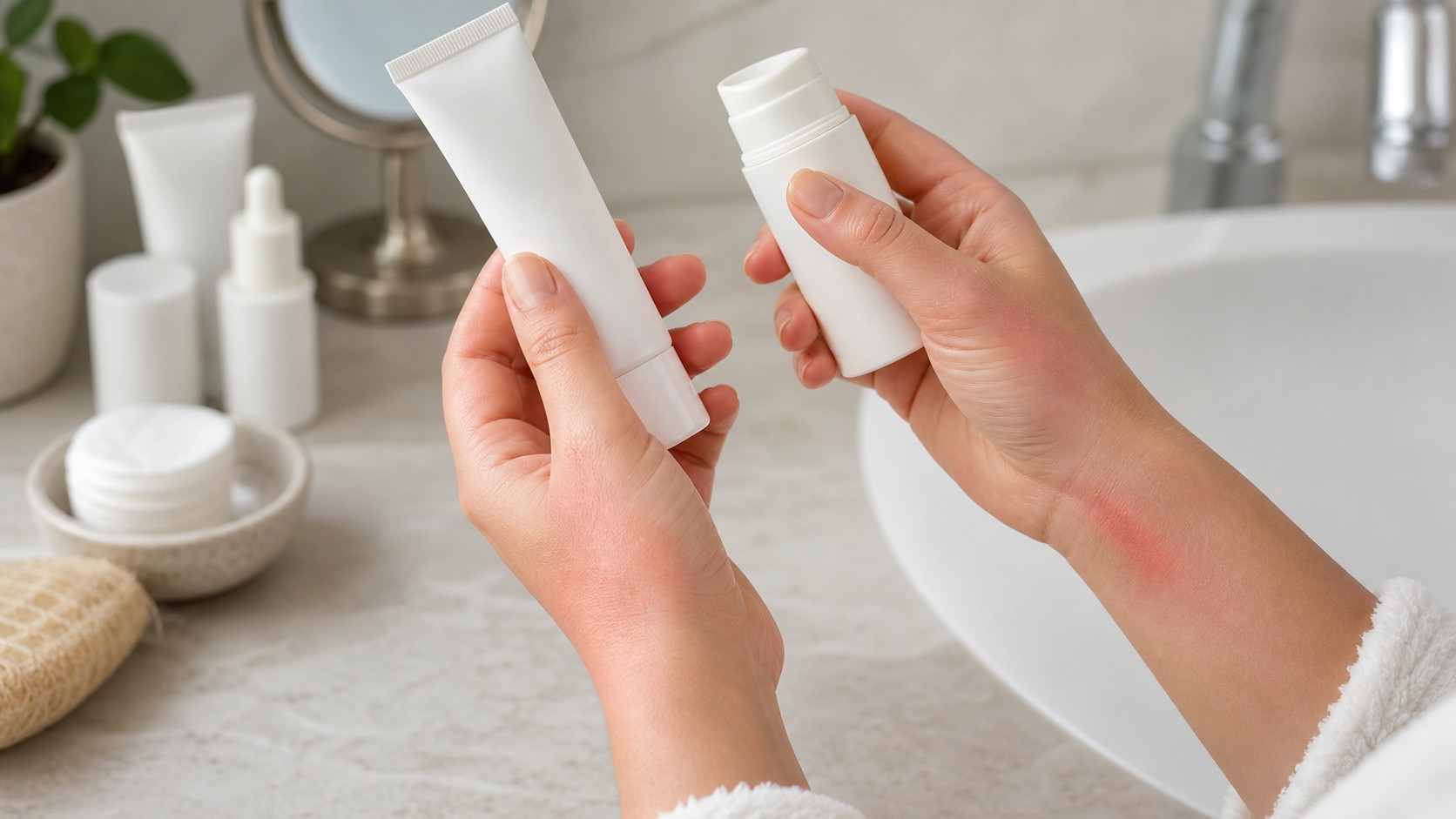
Patch testing is not a guarantee, but it is a sensible pause before putting a new product all over a reactive face. Apply a small amount near the jaw, behind the ear, or on a discreet area of the neck for a few nights. Watch for itching, burning, swelling, new rash, or a delayed roughness that appears after repeated use.
If the test area stays comfortable, move to once-daily facial use before making it your morning and night moisturizer. Sensitive skin often reacts to combinations rather than single products, so keep the rest of the routine steady during the trial. Changing cleanser, serum, exfoliant, and moisturizer at the same time makes it almost impossible to know what helped or harmed.
A short adjustment period can happen with some formulas, but sharp burning is not a sign of effectiveness. Neither is persistent redness. Dermatologist-style advice is refreshingly practical here: a moisturizer should make the skin feel more comfortable, not ask the skin to endure it.
Matching Moisturizer To Common Sensitive-Skin Moments
After over-exfoliation, choose a plain cream with ceramides, glycerin, and minimal extras. The goal is recovery, not glow. Skip acids and retinoids until the skin no longer feels hot or raw. A bland barrier cream can seem boring, but boring is often exactly what stressed skin needs.
For daily dryness, look for a formula that keeps the face comfortable for several hours without needing constant reapplication. If skin feels tight by lunch, the moisturizer may need more occlusive support. If it feels greasy but still dehydrated, a hydrating layer under a lighter cream may work better than switching to a heavier product alone.
Where Dermatologist Picks Differ From Trend Picks
Dermatologist-friendly moisturizers tend to prioritize tolerance, evidence, and barrier support. Trend picks often prioritize sensory appeal, novelty, or a headline ingredient. There is nothing wrong with a product feeling luxurious, but sensitive skin should not be asked to pay for that luxury with stinging or instability.
A strong sensitive-skin pick can look modest on the shelf. It may have no scent, no sparkling texture, and no dramatic promise. What it offers instead is consistency: fewer flare-ups after cleansing, less makeup grabbing onto dry patches, and a calmer baseline that makes the rest of the routine easier to judge.
This is especially important when skin is both sensitive and acne-prone. The best moisturizer should not clog heavily or leave the face coated, but it still has to protect the barrier. Stripping acne-prone sensitive skin usually backfires because irritation can make breakouts and redness harder to manage.
Think of the moisturizer as the routine’s stabilizer. Once it works, you can make smarter decisions about sunscreen, treatment serums, and actives. Without that stable base, every new product feels like a gamble.
The Simple Buying Rule
A good rule is to buy for the skin you actually have at its most reactive, not the skin you wish you had on a perfect day. If your face flushes, stings, flakes, or tightens easily, choose the moisturizer that supports comfort first. Radiance, firmness, and smoothness are easier to pursue once the barrier is not constantly protesting.
Read the front of the package, but trust the ingredient list and your skin’s response more. Words like calming and hypoallergenic can be helpful clues, yet they are not magic shields. Fragrance-free, barrier-supportive, and texture-appropriate are more useful filters when narrowing the field.
The best dermatologist pick is ultimately the one you can use consistently. Sensitive skin improves when the routine stops swinging between harsh correction and emergency repair. A steady moisturizer may not feel exciting on day one, but over several weeks it can make the whole face easier to live with.
How To Layer Moisturizer With The Rest Of Your Routine
Moisturizer works best when it has a defined place in the routine. After cleansing, apply it before the skin has fully dried down so humectants and softening ingredients can trap a little water where it is useful. In the morning, let it settle before sunscreen. At night, use it as the step that tells your skin the day is finished and the barrier can recover.
If you use a treatment serum, moisturizer can become a buffer instead of an afterthought. Applying a thin layer before a retinoid or acid may reduce irritation for reactive skin, while a second light layer afterward can soften dryness. This method may slightly slow the feel of a treatment, but for sensitive skin, tolerability is often what makes long-term results possible.
When A Moisturizer Is Not Enough
Sometimes the problem is not the moisturizer. If skin stays inflamed despite a calm formula, the cleanser may be too stripping, sunscreen may be irritating, exfoliation may be too frequent, or an underlying condition may be active. A moisturizer can support the barrier, but it cannot always overcome a routine that keeps creating new irritation.
Persistent eczema-like patches, swelling, painful cracking, or redness that spreads should be taken seriously. Dermatologists can identify contact allergies, rosacea, dermatitis, or acne-treatment irritation that needs a more specific plan. The right moisturizer still matters, but it may need to sit inside medical guidance rather than carry the whole job alone.
It is also possible to need different moisturizers for different zones. A lightweight lotion may suit the center of the face, while a richer cream protects dry cheeks or the corners of the nose. Sensitive skin does not always follow one uniform map, and targeted use can prevent overloading areas that do not need extra weight.
The most polished routine is not the one with the prettiest lineup. It is the one that makes the skin predictable. When your moisturizer helps you wake up with less tightness, apply sunscreen with less stinging, and recover faster after weather or actives, it has earned its spot.
The Dermatologist-Style Takeaway
Dermatologist-style moisturizer advice is ultimately conservative in the best sense. It asks whether the product supports the skin barrier, avoids predictable irritants, fits the person’s texture needs, and can be used repeatedly without drama. That framework may sound simple, but it protects sensitive-skin shoppers from being pulled between every new launch and every alarming ingredient claim.
The winning moisturizer should leave your skin calmer than it found it. It should make cleansing less risky, sunscreen more comfortable, and treatment products easier to pace. When a formula does those things consistently, it becomes more than a cream on the shelf. It becomes the quiet base that lets the rest of your skincare decisions make sense, especially on the ordinary days when your skin needs reliability more than novelty. That quiet reliability is often what separates a true sensitive-skin staple from a product that only feels appealing in the moment. It also makes repurchasing easier because comfort, not hype, becomes the standard.